
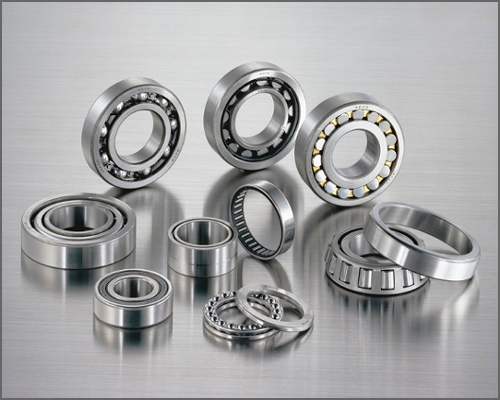
Most components fail quietly. Tapered bearings fail honestly. They don’t pretend. They don’t hide stress. When loads aren’t handled properly, they talk—through noise, heat, wear patterns, and shortened life. And nowhere is this more obvious than when a bearing is asked to handle radial and axial loads at the same time.
This is where tapered bearings earn their reputation—and where weak manufacturing gets exposed fast.
That’s why people who actually run machines care deeply about tapered bearing manufacturers, not just bearing sizes.
Combined Loads Are Not a Special Case. They’re the Default.
Let’s kill a myth first.
Combined radial and axial loads aren’t “extreme conditions.” They are normal life.
If your shaft:
- Transmits torque
- Carries weight
- Sees thrust from gears, wheels, or process forces
You already have combined loading.
Radial load pushes the shaft sideways.
Axial load pushes it along its axis.
Deep groove bearings struggle here. Cylindrical bearings avoid axial loads altogether. Tapered bearings? They’re built for this exact fight.
But only when they’re made right.
The Geometry Is the Trick — And the Trap
Tapered bearings don’t rely on brute strength. They rely on geometry.
The rollers aren’t straight. They’re angled. The raceways are angled too. All those imaginary lines meet at one theoretical point on the bearing axis. When that happens, forces don’t clash—they resolve.
Radial load tries to push the roller sideways.
Axial load tries to push it along the axis.
The taper redirects both into controlled rolling contact.
That’s the genius.
But here’s the uncomfortable truth:
If the geometry is even slightly off, that harmony collapses.
Instead of rolling smoothly, rollers start:
- Sliding microscopically
- Edge loading
- Fighting preload
And suddenly your “combined load solution” becomes a heat generator.
This is where serious tapered bearing manufacturers separate themselves from catalog sellers.
Load Sharing Happens Roller by Roller
In a well-made tapered bearing, load distribution is deliberate.
Each roller carries its share. Not equally, but predictably. The contact patch spreads across the roller length instead of biting into one corner.
When radial and axial loads combine, the bearing doesn’t panic. It shifts contact naturally, staying inside safe stress limits.
Poorly made bearings don’t distribute load. They concentrate it.
You’ll see:
- Polished wear bands in one zone
- Dark heat marks on one side
- Premature pitting that makes no sense on paper
Those are manufacturing problems, not application mistakes.
And experienced engineers know this is why tapered bearing manufacturers matter more than theoretical load ratings.
Preload Is Not Optional, It’s the Steering Wheel.
Tapered bearings don’t self-correct like ball bearings. They need guidance.
Preload sets:
- Internal clearance
- Contact angle behavior
- Load sharing stability
Too little preload and rollers skid under axial load.
Too much preload and friction climbs immediately.
Now here’s the catch: preload only works if the bearing dimensions are consistent.
If inner and outer races vary from batch to batch, your preload calculation is fantasy. One bearing runs fine. The next one cooks itself.
Reliable tapered bearing manufacturers control dimensional repeatability tightly so preload actually means something.
Why Axial Load Exposes Bad Steel Faster
Radial load alone is forgiving.
Axial load is not.
Axial force pushes rollers hard into the raceways, increasing contact stress instantly. Any weakness in steel quality, heat treatment, or surface finish shows up fast.
In badly made bearings, axial load leads to:
- Smearing on raceways
- Micropitting that spreads aggressively
- Temperature rise without speed increase
This is why tapered bearings used in wheel hubs, gearboxes, and heavy equipment fail dramatically when quality is compromised.
Good tapered bearing manufacturers design for axial abuse, not just catalog numbers.
Heat Is the Report Card
When tapered bearings handle combined loads correctly, temperature stabilizes. It doesn’t matter if the load is heavy—as long as geometry, finish, and lubrication cooperate.
When something’s wrong, heat spikes.
And heat tells you why:
- Geometry errors raise friction everywhere
- Surface roughness destroys lubricant film
- Incorrect preload multiplies axial stress
That’s why thermal behavior is one of the first things seasoned technicians watch.
This is also why trusted tapered bearing manufacturers test bearings under load, not just spin them unloaded for inspection.
Real Machines Don’t Load Bearings Symmetrically
Another truth nobody likes to admit: real-world loads are messy.
Misalignment happens. Shafts flex. Housings breathe under temperature changes. Axial loads fluctuate.
Tapered bearings can tolerate this chaos—if the manufacturer planned for it.
That means:
- Proper roller crowning
- Controlled contact geometry
- Steel that behaves predictably when hot
Cheap bearings crack under real life. Good ones adapt.
This adaptability is engineered, not accidental. And it’s why experienced buyers stay loyal to proven tapered bearing manufacturers.
Where DEC Bearings Fits into This Picture
DEC Bearings understands that tapered bearings are not passive components. They’re active load managers.
Their focus is on:
- Stable geometry that holds under combined load
- Surface finishes that protect lubrication films
- Heat treatment that doesn’t surprise you after warm-up
- Assembly discipline that keeps every roller doing its job
The result is bearings that don’t flinch when radial and axial loads show up together—as they always do.
The Mistake Buyers Keep Making
People still buy tapered bearings like they’re buying bolts.
Same size. Same spec. Cheapest wins.
Then the machine:
- Runs hotter than expected
- Develops noise under thrust
- Needs replacement way too early
And suddenly everyone blames lubrication, alignment, or the operator.
Rarely do they question the bearing itself—or the tapered bearing manufacturers behind it.
That mistake is expensive.
Conclusion
Tapered bearings don’t magically handle combined radial and axial loads. They earn that ability through geometry, material quality, and manufacturing discipline.
When done right, forces resolve cleanly. Rollers stay stable. Heat stays controlled. Noise stays absent. When done wrong, combined loads expose every shortcut instantly.
That’s why the smartest decisions aren’t about bearing size or price—they’re about choosing tapered bearing manufacturers who understand how real loads behave in real machines.
Because in the end, tapered bearings don’t fail randomly. They fail honestly.