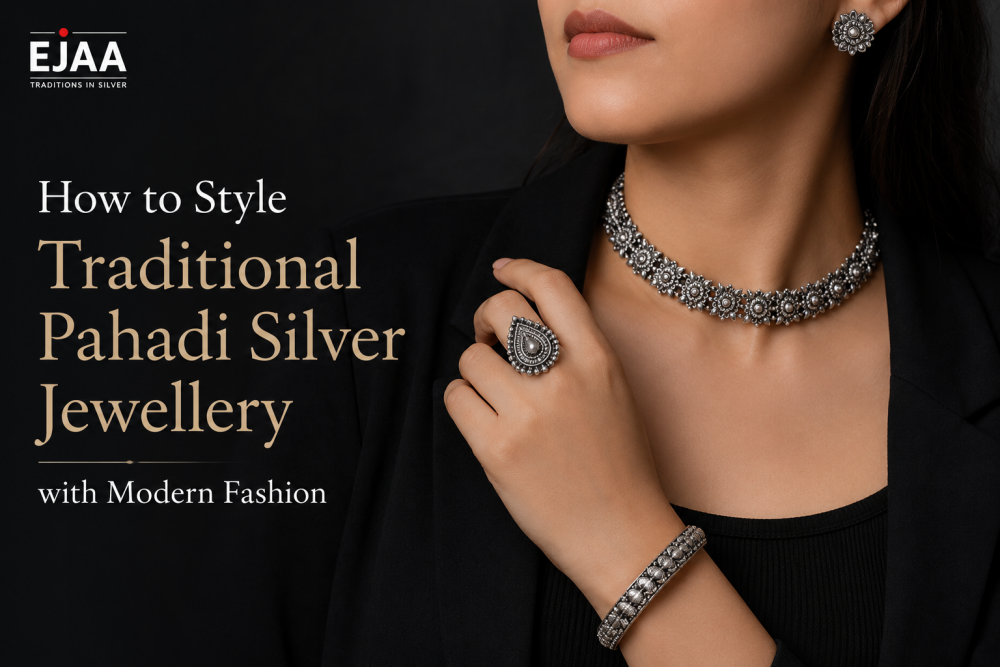
Pahadi silver jewellery carries the imprint of mountain hands shaped with patience, tradition, and craft no machine can replicate. Yet for many women, it sits quietly in a box, waiting for the right occasion.
That occasion is now. Traditional Pahadi silver works beautifully with a linen kurta, a silk saree, a blazer, or your favourite jeans. This guide covers everything from weddings and festivals to office wear and everyday styling.
What Makes Pahadi Silver Jewellery Special?
Pahadi jewellery crafted in the hills of Uttarakhand is known for its bold tribal aesthetic, intricate handwork, and 92.5 sterling silver. Each piece reflects the living traditions of Kumaoni and Garhwali culture – a Kumaoni Nath, a Guluband choker, a Pahuchi bracelet, each carrying the identity of the mountain communities that created them.
The oxidised finish, geometric motifs, and raw weight give these pieces a visual language unlike anything else in Indian jewellery – lived-in, intentional, and surprisingly versatile.
You can explore and buy these at ejaa.in
How Do You Style Traditional Silver Jewellery with Modern Outfits?
The key principle is contrast. Traditional Pahadi silver jewellery has a strong, textured character. To let it shine, pair it with outfits that are relatively clean in silhouette and neutral or earthy in tone.
With Western Wear: A chunky Guluband choker or a bold Hasuli worn over a white cotton shirt or a black turtleneck creates an instant style statement. The rawness of Kumaoni handwork against clean tailoring looks effortlessly editorial. Keep the rest of your accessories minimal – no stacking of gold, no competing prints.
With Sarees: For a cotton or Chanderi saree, a heavy Pahadi neckpiece from Ejaa’s Neckpiece collection paired with a pair of silver Jhumki earrings brings the perfect amount of old-world gravitas. With heavier silks like Kanjeevaram or Banarasi, choose one focal piece – a wide Kada or a statement Guluband – rather than layering multiple items.
With Salwar Suits and Kurtas: Pahadi tribal jewellery pairs beautifully with handloom and khadi. A long oxidised silver Matarmala over a straight-cut kurta in indigo or mustard creates an earthy, grounded look that feels both traditional and thoroughly contemporary. Explore Ejaa’s Matarmala collection to find the right piece for this look.
With Jeans and Casual Wear: This is where Ejaa’s Weightless collection shines – lighter Pahadi-inspired pieces like slim silver hoops, a delicate Janjeer, or a small Kumaoni Nath that bring cultural character into your everyday outfits without feeling overdressed.
The goal is always the same – let the jewellery lead. Pahadi silver from Ejaa is crafted with enough presence to carry an outfit on its own. Trust it.
How Do You Style Silver Jewellery for an Indian Wedding?
Weddings in India have long been the territory of gold. But over the last decade, silver jewellery for weddings has moved from an alternative to an aesthetic choice, one that is increasingly popular among brides, wedding guests, and bridesmaids alike.
Can Silver Jewellery Be Worn at Weddings Instead of Gold?
925 sterling silver jewellery in richer designs, temple-motif necklaces, layered chains with pendant sets, or chunky silver bangles can hold their own against even the most elaborate outfits. The trick is scale. For weddings, go bigger than you normally would. A delicate silver chain that you might wear to work needs to be replaced by a more substantial piece broader, heavier, more layered.
For brides choosing silver, the look works best with pastel lehengas (pale pinks, lavender, sage green, off-white), where the coolness of silver complements rather than clashes. For guests, a silk saree in jewel tones like teal, burgundy, or deep green with a Pahadi silver necklace and matching earrings is a combination that always draws admiring glances.
What Silver Jewellery Pieces Are Best for Festive Occasions?
Festivals are where traditional silver jewellery truly belongs, and Pahadi pieces are particularly well suited here. For occasions like Dussehra, Navratri, Diwali, or Baisakhi, the following pieces work exceptionally well:
- Hasuli or collar necklaces: A traditional Pahadi hasli that wide, rigid neckpiece worn over a mirror-work blouse or a bandhani dupatta is striking without being overdone.
- Jhumkas and chandelier earrings: Heavy silver jhumkas with tribal engravings pair beautifully with festive kurta sets and lehengas.
- Maangtika: A silver Maangtika adds a ceremonial, celebratory touch to any festive lehenga or kurta set without overpowering the look.
- Bangles and kada: Wide silver kada stacked two or three together on one wrist, and left bare on the other, strikes the right festive balance.
Silver jewellery for festivals should feel celebratory but not overdone. The Pahadi aesthetic already has ceremony built into it trusting the jewellery to do the talking.
Is Sterling Silver Jewellery Suitable for Everyday Wear?
Yes and this is where 925 sterling silver jewellery genuinely wins. Unlike gold, which carries a social weight that can feel out of place on ordinary Tuesday mornings, silver has an ease about it. It is the material of daily rituals and quiet confidence.
For everyday silver jewellery, Pahadi-inspired pieces work well when you choose the smaller, lighter versions of traditional forms. A slim silver ring with a tribal motif, a pair of small jhumkas, or a delicate oxidised chain worn beneath a collar these bring the cultural richness of Pahadi craft into your everyday life without demanding attention.
How Can I Style Silver Jewellery for Office Wear?
Office wear calls for restraint. Choose one piece and wear it with intention. A simple oxidised silver pendant on a thin chain worn over a formal shirt, or a single statement ring paired with silver stud earrings, keeps the look polished and professional. Avoid heavy, layered pieces in formal environments save those for evenings and weekends.
Which Silver Jewellery Designs Are Trending in India?
Silver jewellery fashion trends in India reflect a clear appetite for pieces that are both authentic and wearable. Some of the most-sought styles include:
- Oxidised tribal jewellery with engravings and chunky links
- Filigree work – delicate handcrafted detailing rooted in Pahadi craft traditions.
- Minimalist 925 sterling silver thin bands, geometric pendants, simple hoops
- Nature-motif sets featuring leaves, flowers, birds, and moon shapes
- Silver and enamel combinations blending colour into heritage designs
At Ejaa, these trends come to life across four collections – Ejaa Vintage, Ejaa Pride, Ejaa Statements, and Ejaa Weightless – each rooted in Uttarakhand craft, designed for modern wardrobes.
How Do You Layer Silver Necklaces Without Looking Overdressed?
Layering silver necklaces is an art, not an accident. The rule of three applies well here: combine necklaces of three clearly different lengths so they do not compete for space at the neck.
For Pahadi silver, a good layering combination might be:
- A short choker or Guluband (traditional Pahadi style)
- A mid-length chain with a pendant
- A longer, thinner chain worn loosely
The key is that the heavier, more ornate piece should be the closest to the neck. Let it anchor the look. The longer pieces provide flow and lightness. Also, do not mix oxidised silver with polished silver in the same layer; the contrast in finish creates visual noise. Keep the finishes consistent within a look.
How Do I Choose the Right Silver Jewellery for My Face Shape?
Face shape matters more for earrings than any other silver piece.
- Round face: Long, angular earrings drop earrings, elongated chandelier styles create the illusion of length.
- Oval face: Lucky you most earring shapes work. Pahadi jhumkas in particular look outstanding on oval faces.
- Square face: Curved shapes soften strong jawlines. Round hoops or circular drop earrings work well.
- Heart-shaped face: Choose earrings that are wider at the bottom than the top to balance a narrower chin.
- Long face: Wide, horizontally-oriented earrings, broad jhumkas, wide hoops add visual width.
Which Silver Jewellery Pieces Should Every Woman Own?
If you are building a silver jewellery wardrobe, start with these five essentials:
- A pair of jhumkas – the workhorse of Indian silver jewellery, appropriate for almost every occasion.
- A statement necklace – something with presence, whether that is a Pahadi hasli or a layered tribal piece.
- Simple silver studs – for days when you want silver without statement.
- A silver cuff or kara – easy to wear, easy to style, and endlessly versatile.
- A slim silver ring – even a plain band in 925 sterling silver adds a quiet elegance to any look.
How Do I Care for Sterling Silver Jewellery to Prevent Tarnishing?
Sterling silver tarnishes when exposed to air, moisture, and skin oils but proper care extends its life significantly.
- Store correctly: Keep silver in airtight pouches or boxes, away from direct sunlight and humidity. Anti-tarnish pouches or chalk sachets help absorb moisture.
- Clean regularly: Use a soft silver polishing cloth or a mild solution of warm water and a drop of dish soap. Rinse well and dry immediately.
- Avoid harsh chemicals: Remove silver before swimming, applying perfume, or using lotions. Chlorine and sulphur compounds are silver’s biggest enemies.
- Wear it often: Counterintuitively, wearing silver regularly keeps it polished and the gentle friction prevents tarnish from building up.
Handcrafted Pahadi silver, particularly oxidised pieces, should never be over-cleaned. The darkened finish is intentional and part of the design polishing it away removes the very quality that makes the piece beautiful.
Why Is Handcrafted Silver Jewellery Better Than Mass Produced Jewellery?
Mass-produced silver jewellery is made by machines in factories, often from lower grades of metal, with uniform and repeatable designs. Handcrafted silver jewellery is the opposite of all of that.
Each handcrafted piece carries the mark of the maker, slight asymmetries, texture variations, and the kind of detail that machines cannot replicate. When you buy handmade Pahadi silver, you are not buying a product from a catalogue. You are buying the skill of an artisan, the tradition of a region, and something that no one else in the world will have in quite the same form.
Ejaa has been supporting Uttarakhand’s silver artisans since 1985 – a legacy of craft that no factory can replicate.
Does Silver Jewellery Go with Traditional Indian Wear?
Without question. Silver has been part of Indian adornment for thousands of years long before gold became the dominant metal of celebration. In many parts of India, silver is considered auspicious, protective, and sacred. The hill communities of the Himalayas have worn silver as their primary jewellery metal for generations, and those traditions carry cultural weight that gold simply does not have in these contexts.
Silver with traditional Indian wear, particularly handloom sarees, phulkari dupattas, bandhani lehengas, and tribal textiles creates a visual harmony that gold can sometimes overpower.
Final Thoughts
Traditional Pahadi silver jewellery is not a relic of the past. It is a living tradition with extraordinary relevance to how women want to dress and present themselves today with intention, with cultural pride, and with an eye for craftsmanship that stands apart from the disposable fashion that surrounds us.
Whether you are dressing for a wedding, a festival, the office, or simply a quiet day at home, there is a Pahadi silver piece that belongs in that moment with you.
Explore handcrafted, authentic Pahadi silver at Ejaa where traditional mountain craft meets the modern wardrobe.