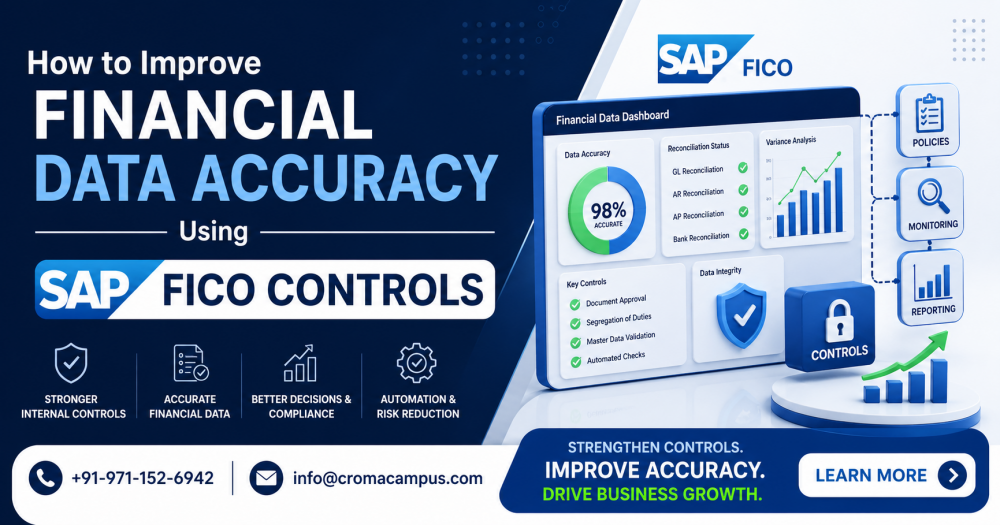
In today’s fast-paced business world, the financial data accuracy is not a luxury anymore but is becoming a necessity. Well, the errors in the financial reporting can lead to compliance failures, poor decision-making, and reputational damage. SAP FICO offers a set of internal controls that can help organizations maintain clean, reliable, and audit-ready financial data.
If you are a financial professional or looking to become one, then you can apply for the
SAP FICO Course. Taking this course can help you become a SAP consultant, and understanding these controls is the best way to drive financial excellence. So let’s begin discussing this in detail:
Why Financial Accuracy Matters?
Every big decision a company makes relies on its financial data. If those numbers are off, everything else, like budgets and reports for investors, will be off too. Taking SAP FICO Training can help solve this by putting “guards” at different stages of the work to catch and stop mistakes.
Key Tools in SAP FICO for Better Accuracy
1. Data Checks and Auto-Fills
SAP lets you set up rules that check information the moment someone types it in. These rules make sure people fill out the required boxes and enter logical numbers. This stops a mistake before it even hits the system. Other rules can even fill in certain boxes automatically, which cuts down on typos. By catching errors at the very start, you avoid the headache of fixing them later when they are harder to find.
2. Organizing the Chart of Accounts
The way accounts are set up is the foundation of everything. SAP lets you control which details are required for different types of entries. It can make sure that each of the records has the right information, such as the department or project that it belongs to, so the final reports are not missing. When everyone follows the same structure, the data will stay the same, and make this easy to compare different parts of the business.
3. Automatic Bank Matching
Matching bank statements to your own records by hand is a nightmare and leads to tons of errors. SAP FICO can do this automatically. It looks for matching amounts and reference numbers to pair things up, which is faster and much more accurate. This automation means your cash balance is always up to date, and you can spot missing payments or bank fees immediately instead of waiting weeks.
4. Closing the Books at Month-End
To keep the data safe, SAP lets you “lock” certain months. This prevents people from accidentally posting a transaction to a month that is already finished. This keeps the history solid and prevents the numbers from changing after they’ve been reported to bosses or the government. Using a structured closing schedule ensures that the team finishes one period completely before moving on to the next one.
5. Connecting Finance and Management Accounting
In SAP, the main financial records and the internal management records are tied together. When money moves in one, it updates the other at the exact same time. This means you don’t have to spend days at the end of the month trying to figure out why the two systems don’t match. It provides a single version of the truth, so the external tax reports always align with internal budgets.
6. Splitting Up Duties
To prevent fraud or huge mistakes, SAP makes it easy to split tasks between different people. For example, the person who sets up a new vendor shouldn’t be the same person who sends out the payments. The system may use the specific permissions for making sure that these roles stay separate. This principle can add a layer of security that can protect the company’s finances from being misused or stolen.
7. Fixing Issues Between Branches
When different branches of the same company trade with each other, things often get messy. SAP FICO has a tool that automatically finds and flags differences between these branches. This lets the team fix the problem before the final reports are created. Without this tool, companies often struggle with double-counting or missing costs, but this feature keeps everything perfectly balanced across all global locations.
Learning the System:
When you use these tools effectively, you need practice and a deep understanding of how the software works. Applying for the SAP FICO Classes in Pune can help you implement these tools in practice. There are many people who prefer to apply in specific classes or get a certification to learn how to set these controls up properly. If you are able to manage the settings, then it will help you become a valuable part of the finance system.
Conclusion:
SAP FICO is more than just a place that can record transactions, because it is a system that is specially designed for keeping those transactions transparent. When you use these controls, companies can trust the data, stay prepared for the audits, and run a better operation. Having SAP FICO Certification training is helpful for investing your time in learning these features, as it can ensure the financial health of the entire organization.