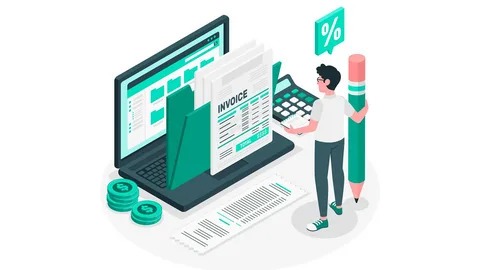
Every business today has to deal with a larger number of invoices from a variety of vendors, departments and electronic systems. Manual tracking can cause finance teams to be slow in certain areas, lack records and have approval confusion. Increasingly, with growing size, it’s more difficult to keep the accuracy and speed of the organizations. The drive to create new workflows and a more structured approach to digital finance processes has meant that businesses have had to rethink traditional workflows and adopt more structured digital finance processes to provide visibility and control of invoice management in everyday operations.
Many organizations today are turning to an automated finance system to help them process their invoices from the time they’re created until they’re approved. This will help to minimise manual involvement and uphold uniformity in the workflow of finance departments. By automating the process of invoice management, teams can use it to track invoices in real-time, minimize errors in the process and ensure good financial discipline. With the increasing complexities of businesses, automated systems have been helping to boost efficiency and accuracy.
Manual Invoice Systems Are Struggling With Scale
Several organizations are still using a workflow system that is based on a spreadsheet and email approvals. From the beginning, this configuration can seem like a good idea, but it begins to fall apart as the number of transactions grows from department to department and from vendor to vendor. Issuing an invoice and tracking its progress to the next step is often a lost art for finance teams, as they lose control of where it is and who is waiting to do the next step.
Another problem seems to be with version control. There may be several copies of an invoice bouncing around among departments, causing confusion in the reconciliation process. Additional time is then spent checking for accuracy of the record by teams. This has a negative impact on closing activities in the month and puts a strain on the finance team.
The manual system makes preparing for audits challenging as well. Information is often spread out in various files, folders, emails and on local hard drives. This leaves finance teams with more time working on documents during audits, as they need to go back and retrieve and verify these documents.
Financial Pressure Is Reshaping Invoice Operations
Rising Transaction Volumes Across Businesses
Today businesses are using an increasing number of vendors. With every new vendor, you’re adding new invoice cycles, approvals and payment schedules. This growth brings more burden to finance staff, particularly in the mid-sized and enterprise size companies.
The more that you use manual tracking, the more unreliable it becomes as the number of invoices increases over time. Teams frequently have to keep going back to reminders and use spreadsheets to keep up to date, which makes it more likely that deadlines will be missed.
Slow Approval Chains in Finance Teams
Many organizations’ approval workflows are still reliant on decision-making hierarchies. There are several departments involved in the invoices’ journey before they get approved. It slows down if one of the stakeholders is not available.
This lag affects the payments’ time. Late payments can be an issue with vendors, impacting trust and business relationships. It also can make it easier to break the internal budgeting process, particularly in those organizations that have strict financial planning processes.
Cost Tracking Becomes Less Reliable
Without the ability to see spending in real time, it’s tough to keep track of spending on a per-department basis. Finance reports are sometimes only made at the end of the month and don’t provide up-to-date financial information.
This will cause the company to spend too much or allocate the budget inefficiently. Departments can keep paying but have no idea of how much backlog and how much they owe for their invoices.
How Invoice Management Automation Works in Real Finance Teams
Automating invoice management adds a streamlined, systematic process into today’s financial landscape, eliminating manual tracking and streamlining the process. Digital signatures, emails or direct upload of invoices into the system. Data extraction tools move the data once it has been ingested and process it into key fields that can be used to generate invoices to be checked.
Then a set of rules is predefined and used to check the accuracy of the system. These rules could be vendor matching, purchase order validation, duplicate detection, etc. Invoices are then passed through validation processes with organisation hierarchy approval workflows and then passed on to a worklist. After validation, the invoices are sent through organisation hierarchy approval workflows and put on a worklist.
Consistency is the key to making this an effective approach. Manual systems place no structure on how invoices are processed, whereas, with invoice management automation, each and every invoice goes through a uniformly structured system. This minimizes the chaos that can arise in business operations and helps to create a more predictable financial environment.
A key element in this is also integration. A significant number of companies integrate their automation solutions into ERP, accounting and procurement. This will decrease duplication of data entry and keep all financial systems in sync.
As time goes on, finance teams can access real-time dashboards to help them see the status of invoices, what needs approval and when they will be paid. This means that there’s less reliance on follow-ups or emailing to track things down.
Why Businesses Are Moving Toward Automation
The accurate data entry and the maintenance of the records are crucial to financial reporting. All the changes in the financial statements can be skewed due to even the smallest of the manual errors, and this may have an impact on the decision-making. These inconsistencies are eliminated or minimized by automating and implementing structured rules for invoice validation across all invoices.
Expectations of regulators are now that companies will have audit trails for all financial transactions. Manual systems have a limited ability to have accurate documentation. Each action, update and approval is captured in an automated system in a structured manner to be ready for audit.
This organized documentation eases stress throughout financial audits and makes it more transparent to all departments. Today’s business world is one in which time is a critical factor. There are times when invoices are not paid on time, which can lead to delays in obtaining timely payment from vendors and cause cash flow planning delays within the business. Automated workflows streamline the entire process so that invoices are instantly passed to the right approvers and waiting time is minimised.
This will establish a smoother financial cycle and minimize reliance on reminders or follow-ups of manual activities.
What Businesses Gain From Automated Invoice Systems
Clear Visibility Across Finance Operations
One challenge that has been faced by finance teams with manual systems is that of data being fragmented. Automation will collect all information relating to invoices and present them in one place with all the stages of the invoice process visible. This minimises the risk of uncertainty and better enables the different departments to coordinate.
More Stable Vendor Relationships
It’s not always a sign of poor financial health when things are not paid on time, as it may be due to processing time. But automated workflows can help minimize these delays by making sure that invoices pass through the approval process without any breaks. This will help build trust and partnership with the vendor and also result in a longer relationship.
Better Handling of Large-Scale Operations
As companies expand, there are lots of invoices associated with the expansion. This will need extra staff and effort to be managed by manual systems. Automated systems don’t have to mean that more work gets done—this works for every business, especially those that are expanding.
Features That Shape Modern Invoice Platforms
Automated Data Capture
Today’s systems can automatically retrieve the data from electronic documents. This helps to minimize manual data entry and enhance data quality in financial transactions. In addition, it is also fast to do initial processing.
Structured Approval Workflows
Approval systems are set up according to the role and rule of an organization. Invoices have a clear workflow that helps track who’s responsible for invoicing and in turn minimises confusion when processing invoices. This also extends the traceability in the different departments.
Reporting and Financial Visibility
Reporting tools offer information on trends in your invoices, outstanding payments, and expenditure by department. Such insights enable finance teams to gain a better understanding of the behaviour of the operations.
A lot of companies rely on invoice management automation as an integral function of monthly reporting due to the fact that it supplies structured and reliable monetary details.
Operational Challenges That Automation Solves
There are a lot of repetitive tasks on which finance teams have to invest lots of time, like data entry, invoice tracking, etc. This workload is reduced by automation and/or enables teams to concentrate on financial analysis and planning.
Manual systems frequently lead to duplicate invoices, wrong amounts and lost records. Automated validation systems will catch these problems and halt them from entering to financial records.
As the number of invoices increases, so does data organization. Automation systems organize and maintain all invoices in a structured format and can easily retrieve them when needed in audits or financial reviews.
How Companies Evaluate Automation Platforms
Integration With Existing Finance Systems
Systems that seamlessly fit with ERP and accounting software are a key consideration for organizations. This will keep financial data in sync across all the systems without manual data synchronisation.
Ease of Use in Finance Teams
Usability is crucial to adoption. Finance teams might not be keen on adopting systems if they are complicated. Simple interfaces are more easily adopted, and less training is required.
Security and Audit Readiness
Financial information must be kept confidential. Businesses want encryption, access control, and audit logging, which will record all the actions taken in the system.
Organizations review invoice management automation solutions to assess their ability to comply with and safeguard data protection demands.
The Direction Invoice Automation Is Heading
AI in Invoice Processing
There is an increasing trend towards recognising invoice patterns and automating invoice classification using artificial intelligence. This minimizes human processing decision-making and speeds up processing.
Cloud-Based Financial Operations
Cloud platforms enable teams to access the data of the invoices from various places. This will help facilitate remote working arrangements and enhance team working for teams spread across the country.
Data-Driven Financial Planning
All of the data associated with invoices is now included in forecasting and budgeting. Rather than simply transcribing the transactions, enterprises look at the structure of the invoices and apply this analysis to make financial decisions.
Conclusion
Invoicing has become more than just a paperwork chore and is now a vital part of business processes that affects productivity. Manual systems become inefficient and ineffective in terms of accuracy, speed and consistency as organisations grow. This complexity can be streamlined with invoice management automation, which simplifies workflows, enhances visibility and minimizes inefficiencies. With time it has evolved into an important part of the financial management system of today in both small and large businesses.
FAQs
What is invoice management automation?
It is a system that digitizes invoice handling, including capture, approval, and tracking within structured workflows used by finance teams.
Why are companies shifting to invoice automation?
Companies are adopting it to reduce manual errors, speed up approvals, and maintain better control over financial data.
How does invoice automation work in practice?
Invoices are captured digitally, validated, and routed through approval workflows before being recorded in financial systems.
Is invoice automation useful for growing businesses?
Yes, it handles increasing invoice volumes efficiently and reduces dependency on manual financial processing.