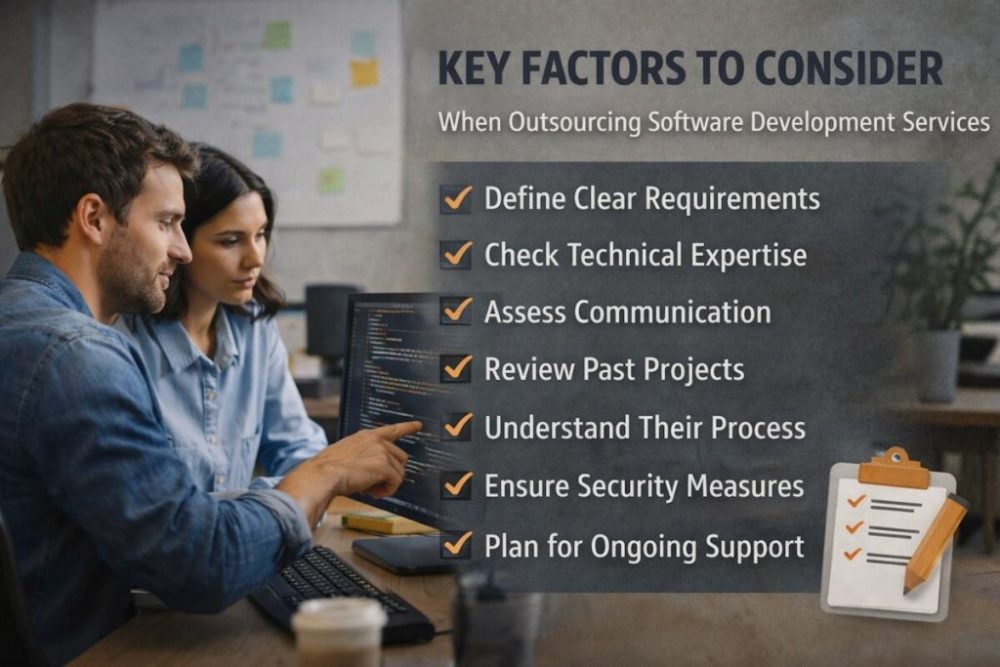
Outsourcing software development is nothing new. Businesses, big and small, do it for different reasons — to save time, cut costs, or just because they don’t want to hire a full in-house tech team. But rushing into it without thinking through the details? That’s where problems start.
If you’re seriously considering outsourcing, there are a few things you need to keep an eye on. Miss them, and you could end up with buggy software, missed deadlines, or worse — a project that never launches.
Let’s break it down.
1. What Exactly Are You Building?
Sounds basic, right? But you’d be surprised how many projects start without a clear idea of what’s needed. Before even talking to a software vendor, figure out:
- What problem are you solving?
- Who’s the end user?
- What platforms will it run on — web, iOS, Android?
- Do you need something simple or a full-blown platform?
The clearer your requirements, the better the results. Vague instructions only lead to scope creep, missed expectations, and, eventually, a lot of finger-pointing.
2. Budget Isn’t Just a Number
You don’t need to break the bank, but you can’t expect top-tier results from bargain-basement offers either. Think about the actual value the development partner brings.
Ask yourself:
- Do they provide post-launch support?
- Are revisions included?
- Is testing part of the package?
It’s not just about hourly rates. A cheaper team that cuts corners will cost you way more in the long run.
3. Time Zones and Communication Gaps
You can outsource across the world. That doesn’t mean you should — not blindly, at least.
Working with a team halfway around the globe can work great if they’ve got solid communication practices. Daily check-ins, transparent timelines, and quick responses can make the distance irrelevant.
But if you’re emailing someone and hearing back 48 hours later? That’s a red flag.
4. Technical Skills — Don’t Just Take Their Word
Most vendors will say they know everything: React, Flutter, Laravel, AWS, the works. Ask for proof.
- Check their past projects.
- Ask to speak with their tech leads.
- Run a small pilot project first, if you’re unsure.
Say you’re building something complex, like a cross platform mobile app development project. You want to be absolutely sure they know how to build once and deploy across Android and iOS, without sacrificing performance or user experience. Don’t just go by what they say. Ask for references, code samples, or even GitHub profiles.
5. Ask About Their Process — and Actually Listen
Any development agency worth hiring will have a clear process. It’s not just about writing code. It’s about planning, tracking progress, fixing bugs, and getting things across the finish line.
A good question to ask: “How do you handle scope changes mid-project?” Their answer will tell you a lot.
Some will panic at changes. Others will have a structured way of adding or removing features without derailing the whole timeline. You want the latter.
6. Cultural Compatibility Does Matter
You’re not looking to grab beers with them, but if you’re working with a team for months, communication style, approach to deadlines, and even feedback handling matter.
Misunderstandings can easily slow things down. Make sure the team is comfortable with open conversations, honest feedback, and quick clarifications.
7. Security and NDA — Not Optional
You’re sharing code, ideas, user data — sometimes all of it. Make sure everything’s protected. Sign NDAs. Ask how they store project files. Make sure their team doesn’t reuse your code elsewhere.
It’s not paranoia. It’s basic hygiene in outsourcing.
8. Future-Proofing Your App
Outsourcing shouldn’t stop at launching version 1. What happens when you need updates? Bug fixes? Or new features?
Think long-term.
Let’s say you’re building a mobile app using chatgpt for customer service. That means integrating APIs, managing privacy concerns, and dealing with real-time user queries. That’s not a “build it and forget it” type of app. You’ll need updates as APIs change and your user base grows.
So make sure your vendor isn’t just there for the short term.
9. Testing — Don’t Leave It to the End
Some vendors treat testing like an afterthought. Don’t fall into that trap. Testing should be baked into every stage of development.
Ask how they test — manual, automated, or both. Bugs found late in the game take more time (and money) to fix. A team that takes QA seriously from day one will save you from painful last-minute scrambles.
10. Support After Launch
Once your app is live, the real work begins. You’ll get feedback, spot bugs, and possibly need to add new features.
Make sure the vendor offers:
- Ongoing support
- Clear timelines for bug fixes
- Easy ways to request new work
If they disappear once the app hits the store, you’re stuck finding someone new to fix their work. And that’s rarely smooth.
11. Understand Their Team Structure
Is it one guy in his basement? Or a full team with project managers, testers, and designers?
If you’re looking to Hire Mobile App Developers for a scalable product, having a structured team helps. You get better accountability, faster deliveries, and way fewer surprises.
It’s fine to work with freelancers for small stuff, but if your product is ambitious, go with a team that’s built for it.
12. Check Their Tech Stack
Don’t get too caught up in the buzzwords, but still — make sure they’re using tools that make sense for your project. If you’re after something cross-platform, ask why they’re choosing Flutter or React Native. Get their take.
If they insist on building two separate apps when cross platform mobile app development could save time and cost? That’s worth questioning.
13. Don’t Ignore Soft Skills
Sure, coding matters. But so does reliability, responsiveness, and the ability to work through problems.
You want a partner, not just a coder.
14. Run a Paid Trial Project
Still unsure? That’s fine.
Try a small project first. Something measurable with a clear deadline. It’ll show you how they communicate, how they handle scope, and whether they actually deliver.
Better to spend $1K testing a vendor than lose $50K on a failed project.
15. Know What You’re Signing
Contracts matter. Read the fine print. Who owns the code? What happens if you end the contract early? Is there a kill fee?
No one likes legal drama, but it’s better to clarify things now than argue about them later.
Wrapping It All Up
Outsourcing isn’t magic. It’s a working relationship — and like any relationship, it takes time, effort, and clear expectations.
Start with clarity. Choose based on experience and trust, not just price. Whether you’re building a customer support mobile app using chatgpt, a business dashboard, or going the cross platform mobile app development route, get a partner who understands your vision.
If you’re unsure where to begin, maybe it’s time to Hire Mobile App Developers who’ve done it all — not just code, but build products that actually ship and scale.
Know what you want. Ask the right questions. And don’t be afraid to walk away if something feels off.
That’s how you avoid the mess and end up with software that works.