
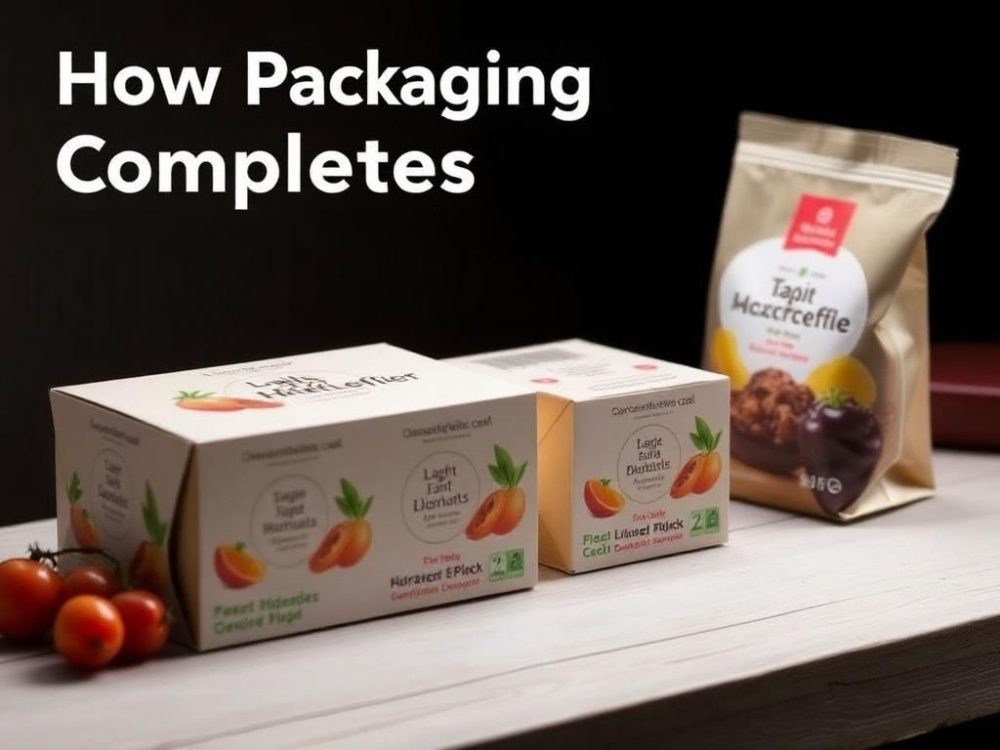
Many food founders believe their work ends when the recipe is perfected. That idea sounds logical until the product enters the real market. Once food leaves the controlled environment of the kitchen and moves into shops delivery boxes and storage rooms, packaging becomes part of the food experience itself. People never taste first. They look first and hold first.
They judge first. Industry behaviour studies consistently show that the physical appearance of the pack influences more than two thirds of food buying decisions. That makes packaging not a background activity but a continuation of food design.
Brands that ignore this reality often wonder why a great tasting product fails to build loyalty. The answer usually sits in the customer’s hand, not on their tongue.
Packaging as a Visual Extension of Food Design
Food always carries a feeling. A bakery item feels comforting. A premium dessert feels confident. A health snack feels clean and light. Packaging conveys that feeling even before the pack is opened.
A cheap thin box around an expensive dessert breaks the illusion immediately. People do not consciously analyse board thickness or coating type yet they still sense when something feels wrong. The surface texture the sound when the lid opens the way light reflects from the finish all shape expectations.
Sensory marketing research confirms that people expect richer flavour from heavier and better finished packs even when the food is identical.
This is why serious food brands do not choose packaging based only on cost. They choose it based on the story the material tells.
Preserving Freshness Aroma and Texture
Design without function does not survive in food markets. Freshness is fragile. Aroma escapes easily. Texture changes fast. Oxygen moisture and light are the silent enemies of food quality.
Even small leaks flatten flavours long before expiry dates are reached. This is not theory. It is observed daily in quality testing labs. This is why barrier materials laminated films and controlled thickness levels exist. They slow the movement of air and moisture so the product tastes on day thirty what it tasted on day one.
New brands often focus on colours and forget this layer. They only realise the mistake when customers start saying the product tasted different from the last time. By then reputation is already damaged.
Packaging and Brand Consistency
A real brand feels familiar. When buyers see it again they recognise it instantly without reading a name. That recognition is built through consistent packaging design.
When a brand keeps changing layouts colours or pack styles customers quietly lose confidence. It feels temporary. Some younger brands use custom die cut mylar bags not because they look trendy but because the structure holds design elements in place and keeps branding clear from batch to batch. It allows the food and the packaging to speak in the same voice.
When the pack and the product agree with each other buyers stop thinking about whether the brand will still exist next year. They start building habits around it.
Consumer Interaction and Unboxing Experience
The first contact with food is never the taste. It is the opening. That small moment sets the tone for everything that follows.
In food adjacent categories where safety and compliance matter more such as supplements infused products or specialty foods the way a pack opens becomes a trust signal. If seals are weak or opening feels clumsy people hesitate even if they do not say it out loud.
Consumer behaviour research shows that products which are easy to open and easy to reseal are far more likely to be purchased again. Convenience becomes part of perceived quality. This is one reason why personalized mylar bags are so widely used in modern food packaging when done properly. They fit real life use instead of forcing customers to adapt to the pack.
Practical Design Considerations
Behind every attractive food package is a layer of regulation most people never see. Food contact safety material migration limits, ink compliance, moisture resistance, and transport durability shape what is allowed.
These are not decorative choices. They are rules that protect health. Brands that treat compliance as an afterthought often face recalls or expensive redesigns. The smarter approach is to design within the rules from the beginning.
When compliance and aesthetics are considered together, packaging becomes stronger not weaker. It becomes something that can survive storage shelves, courier handling and kitchen cupboards without losing its integrity.
Conclusion
Food design does not end with a recipe. It ends with a customer opening a package and finding exactly what they expected. Packaging carries that promise from production to plate.
Brands that understand this do not treat packaging as a cost to minimise. They treat it as a tool to protect quality, express identity and build trust. That trust is what turns first time buyers into long term customers.