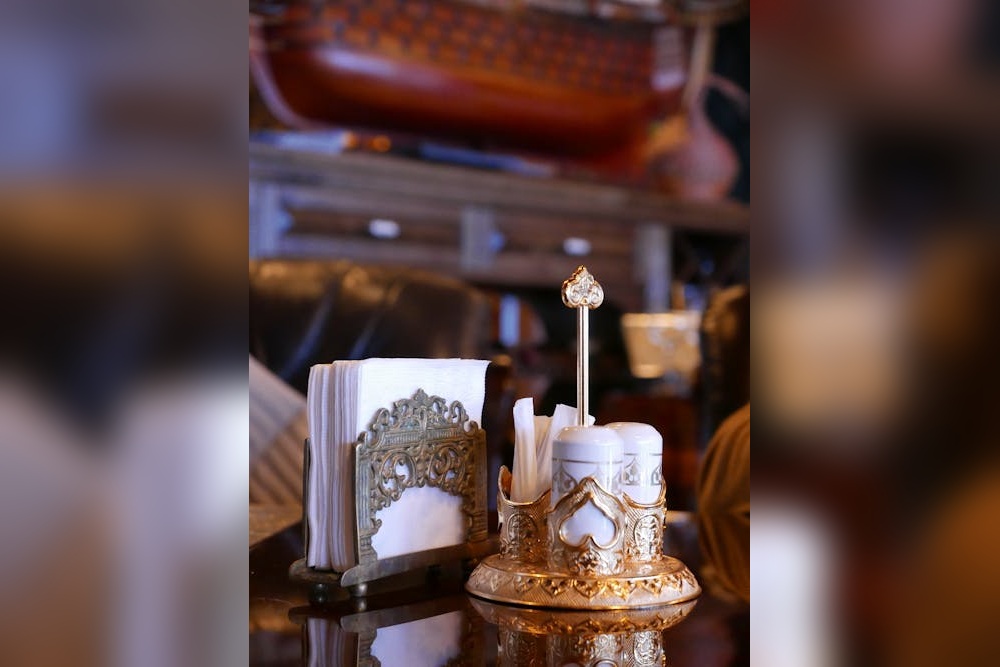
Nobody walks into a kitchen store planning to spend twenty minutes on a napkin holder. You grab one that looks right, take it home, put it on the table — and within six months you are either perfectly happy with it or quietly wishing you had thought about it more carefully. For most people the stakes are low enough that a wrong call is just a minor annoyance. For a restaurant owner with forty tables, that same wrong call becomes a reorder budget line that keeps coming back. The material question — metal or wood — is where most of that difference lives. And it is worth getting right the first time.
What Wood Actually Feels Like After Six Months of Daily Use
There is a reason wooden napkin holders for dining tables dominate the lifestyle photography on retail sites. Wood photographs beautifully. Warm grain, natural texture, instantly familiar. On a carefully styled dining table in a dry climate with minimal daily contact, a good quality wooden holder can look that way for years.
The issue is what happens when it actually gets used. Wood is porous by nature. It absorbs — moisture from spills, steam from dishes coming off the stove, humidity from the air in a kitchen or outdoor dining space. That absorption causes swelling over time. Swelling leads to warping. A napkin holder that sat flush and balanced on the table in January starts to rock slightly by July. The finish dulls. If it is near the kitchen at all, the base darkens from the moisture it has pulled in.
For a home dining table in a dry part of the country, away from the kitchen, used gently — wood is fine. For a kitchen table in the American Southeast where summer humidity is relentless, for an outdoor dining setup, or for any restaurant environment where the same table gets wiped down after every single service — wood creates maintenance work that most people did not sign up for when they bought it.
The reorder problem is the other thing nobody mentions. Wood varies. Two batches of the same holder from the same supplier will often arrive with different grain tones. If you are running a restaurant and replacing six holders from a set of forty, the replacements will look slightly different from the ones already on the tables. That visual inconsistency across a dining floor is harder to ignore than it sounds.
The Case for Metal Napkin Holders — What Powder Coating Actually Does
A powder-coated metal napkin holder does not behave the way painted metal does. The distinction matters because a lot of cheap metal holders on the market are spray-painted rather than powder-coated — and spray paint does chip, does scratch, and does eventually look worse for wear. Powder coating is a different process: the finish is applied electrostatically and then cured under heat, which bonds it to the metal at a molecular level rather than sitting on top of it.
What that means in practice: a properly powder-coated wrought iron napkin holder will not chip when knocked off a table during a clear-up. It will not scratch when someone pulls a napkin out quickly during a busy dinner. It will not absorb moisture, it will not warp, and it will not look different in batch two than it did in batch one.
Wipe it with a damp cloth after use and it is done.
For US homeowners, that low-maintenance quality matters more than people realise until they have lived with a high-maintenance alternative for a year. For restaurant and café operators, it is the entire argument. You are not going to have your front-of-house team oiling wooden holders between lunch and dinner service. You need something that cleans in ten seconds and looks the same in month eighteen as it did in month one.
Matte black has become the go-to finish for decorative metal napkin holders across American dining tables in 2026 — and it is not just a trend. Matte black sits neutrally against warm wood tones, white tablecloths, bare wood tables and coloured napkins without pulling attention. It does not date the way brass or chrome can. And it is consistent: a matte black iron holder looks the same whether you are buying one for a home dining room or fifty for a restaurant floor.
Metal vs Wood: The Comparison That Actually Matters for US Buyers
Most comparison guides cover this in abstract terms. Here is the practical version:
Durability Under Real Conditions
Metal wins, and it is not particularly close. A wrought iron napkin holder with a proper powder-coat finish will outlast three or four wooden equivalents used under the same conditions. The durability gap widens significantly in any environment with moisture — outdoor dining, kitchen-adjacent placement, restaurant service.
Daily Maintenance
Metal wins again. Wipe, done. Wood needs hand washing, occasional oiling and careful drying to stay in good condition. Most people do not do this consistently, which is why wooden holders tend to deteriorate faster than their specifications suggest they should.
Consistency Across Multiple Units
This is where metal has a decisive advantage for anyone buying more than one piece. A set of metal napkin holders for restaurant use will arrive from the same production batch with identical finish, identical dimensions and identical weight. Wood is a natural material — variation is built in. That is charming for a single decorative piece. For a dining room that needs matching holders across twenty tables, it is a problem.
Aesthetics at Home
This one depends entirely on your interior. Wood genuinely suits farmhouse, rustic and Japandi-style dining rooms where the grain adds warmth that metal does not replicate. In modern, industrial or transitional interiors — and in any commercial setting — metal is the stronger visual choice. The matte black metal napkin holder in particular has crossed from commercial spaces into home dining rooms because it reads as considered rather than functional.
Who Should Choose What: A Straightforward Guide for US Buyers
Choose wood if: your dining room leans rustic or farmhouse, your table is in a dry part of the house away from the kitchen, you entertain occasionally rather than daily, and you are buying one or two pieces rather than a full set.
Metal napkin holder for your dining table if: your interior is modern or industrial, your table is anywhere near the kitchen, you entertain regularly, you are buying for outdoor use, or you simply want something that holds up without any attention from you.
Choose metal without hesitation if you are a restaurant owner, café operator or any commercial buyer sourcing for multiple tables. The durability, the wipe-clean finish, the bulk consistency and the long-term cost-per-use make every other material a compromise at commercial scale.
The Bottom Line Before You Reorder
Most people who end up unhappy with their napkin holder made the decision quickly and based it on how the piece looked in a photograph. That works fine sometimes. It fails when the material does not suit the conditions it is actually going to live in.
Wood looks right on a screen. Metal holds up in a kitchen. For the American dining table — home or commercial — the practical case for decorative metal napkin holders is stronger than most people expect until they have had the comparison play out in real life.
LamboArts manufactures powder-coated iron napkin holders for dining tables across 13 designs — from clean matte black frames to themed cutlery, coffee cup and butterfly designs — for US homes, restaurants and commercial buyers. Browse the full range at lamboarts.com/categories/napkin-holders
Author Bio
This article was contributed by the team at LamboArts — a direct manufacturer of powder-coated metal home décor supplying homeowners, retailers, restaurants and commercial buyers across the USA. LamboArts produces wall art, napkin holders, benches, storage organisers and decorative pieces built for daily home and commercial use. Learn more at lamboarts.com.