The Concept of Smart Cities and Sustainable Development
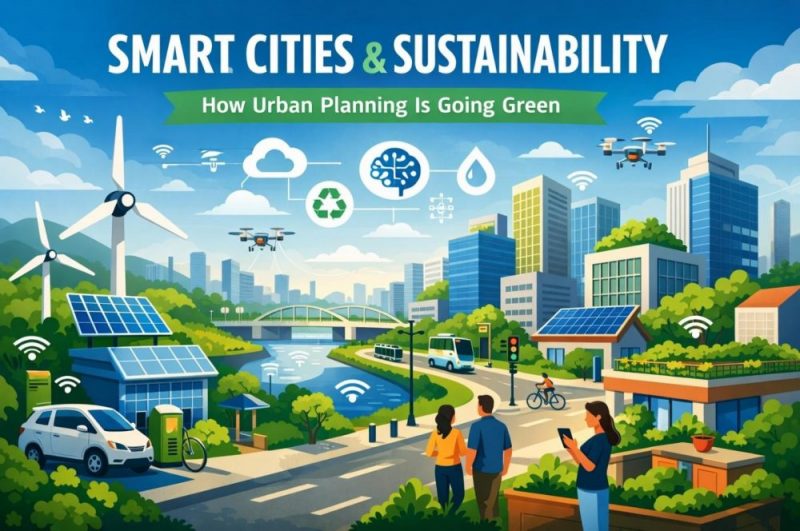
Smart Cities are the cities of the future which will see technology, innovations and sustainable development combining to make life better for its citizens. With the process of urbanization accelerating rapidly all around the world, several problems have emerged like pollution, degradation of natural resources, traffic and climate change. To counter this, urban planners are adopting more and more green and sustainable technology.
The sustainable urban development approach aims at building eco-friendly infrastructure, low carbon emission and effective waste management systems. Owing to emerging technologies such as IoT (Internet of Things), data analytics and renewable energy, smart cities are becoming increasingly sustainable.
In other words, the two concepts of smart city and sustainability are interrelated. Through these, urban areas are being transformed from conventional to more efficient ones.
Role of Technology in Green Urban Planning
Technology plays a crucial role in transforming traditional cities into smart and sustainable urban centres. It enables efficient use of resources, reduce environmental impact and improves overall living standards.
The biggest transformation occurs in the form of adoption of IoT-enabled devices and sensors. The use of these devices enables city administrators to make vital decisions such as traffic management that will ensure minimal wastage of fuel.
Use of sophisticated tools such as data analytics and artificial intelligence helps in anticipating future problems and finding viable solutions to those problems. Along with this, technology also supports the development of smart energy systems, smart grid enables efficient electricity distribution and minimize energy loss.
Overall, technology acts as the backbone of green urban planning by making cities more efficient, responsive and environmentally friendly, contributing to long term sustainability.
Sustainable Infrastructure and Energy Solutions
The ‘concrete jungle’ is not a metaphor anymore but a reality in many developed cities. Massive surface heat, reduced air ventilation and borderline vanishing of natural habitat is the reality of many urban cities now.
This is where sustainable and green infrastructure is gaining importance. Unlike traditional infrastructure which focused on making a city look developed by setting up tall buildings and commercial zones, sustainable infrastructure focus on designing and building cities in a way that it minimizes environmental impact and maximises efficiency and long-term benefits.
This includes the use of eco friendly materials, energy efficient buildings and smart designs that reduce unnecessary resource consumption. Solar panels are now being installed by cities, along with energy-efficient lighting and advanced power grids that ensure maximum energy distribution.
Moreover, sustainable infrastructure also entails the adoption of water conservation techniques such as Smart Water Management and sewage treatment facilities.
Green Spaces and Urban Biodiversity
Green spaces- parks, gardens, green rooftops and urban forests- are essential part of any sustainable urban planning. They improve the air quality, resident well being by providing them with fresh air, lowering city temperature and reducing air pollution. These spaces basically act as the ‘lungs’ of the city by absorbing carbon dioxide and releasing oxygen.
Urban biodiversity refers to the variety of plants, animals and ecosystem within a city. By creating and preserving green spaces, cities can preserve birds, insects and small animals and help in restoring the lost ecological balance.
Moreover, green spaces also provide with health and social benefits. They provide area for recreation, reduce stress and improves the overall wellbeing of an individual including mental, physical and emotional health.
The Human Side of Urban Sustainability
Urban sustainability like fully automatic sensors, traffic flow prediction using AI, air quality monitoring using drones etc. are all a distant possibility if there is no proper human involvement in making it a reality.
Community participation plays a vital role in making tis dream a reality. Affordable housing, reliable public services and equal access to resources will only be possible when the citizens take active part in decision making and put forward their views and opinions openly.
Majority of the smart city projects fail not due to poor tech but due to the lack of awareness and education. Hence, public engagement, accessibility, inclusion and digital equity is essential in order to make smart city project a success and achieve long term stability and sustainability.
Future of urban planning: towards smarter and greener cities
In future, the trend will be for cities to be not only technologically innovative but also environmentally friendly and socially inclusive. Smart cities are using advancements in technologies such are artificial intelligence, big data and automation to operate urban areas more effectively.
Another important component is the increased adoption of green practices. Such as renewable energy, eco friendly constructions and climate resilient infrastructure.
In the upcoming years and decades, the collaboration between government, businesses and the citizens will be the deciding factor in the future of sustainable and green development.
Overall, the future of urban planning aims at building cities that are smarter, efficient, responsive and better suited to meet the needs of both, planet and the people.