Tooth loss affects far more than appearance. It changes how you eat, how you speak, and quietly, over time it affects the bone structure of your jaw. For decades, the standard answers were dentures and bridges. Both work. Neither one truly replaces a tooth. Dental implants do and the growing demand for dental implants in Mumbai reflects exactly how much patients value a solution that functions like natural teeth rather than one that approximates them.
What Are Dental Implants?
A dental implant is a small titanium post that acts as an artificial tooth root, placed directly into the jawbone. Bone tissue integrates with the implant through a process called osseointegration; the bone fuses around the post over weeks and months, creating a stable foundation for the replacement tooth above. Dentures shift. Bridges require modifying adjacent healthy teeth. Dental implants are self-supporting, stimulate the jawbone like natural roots, and function, feel, and look like the real thing.
Understanding the Dental Implants Procedure
Dental implants are positioned very neatly in different stages, with a recovery period to fix the implant before attaching the final tooth.
Consultation and oral examination: The dentist will check all the bone density, gum health and jaw anatomy to ensure that the implants can be supported.
Digital scans and X-rays: Before the treatment commences, 3D imaging and CT scans are taken to make sure that accurate placement, protecting nerves and sinuses.
Placement of implant: The titanium post is inserted into the jaw bone by giving the local anesthesia. The majority of patients indicate that the operation is more comfortable than they imagined.
Healing period: Osseointegration takes two to six months depending on individual healing rates. During this time a temporary restoration may be placed.
Crown Attachment: Following the implant has completely healed, a permanent crown is affixed to the implant to blend with surrounding teeth.
Types of Dental Implants
Understanding the types of dental implants helps patients have a more informed conversation with their dentist about which option suits their specific situation.
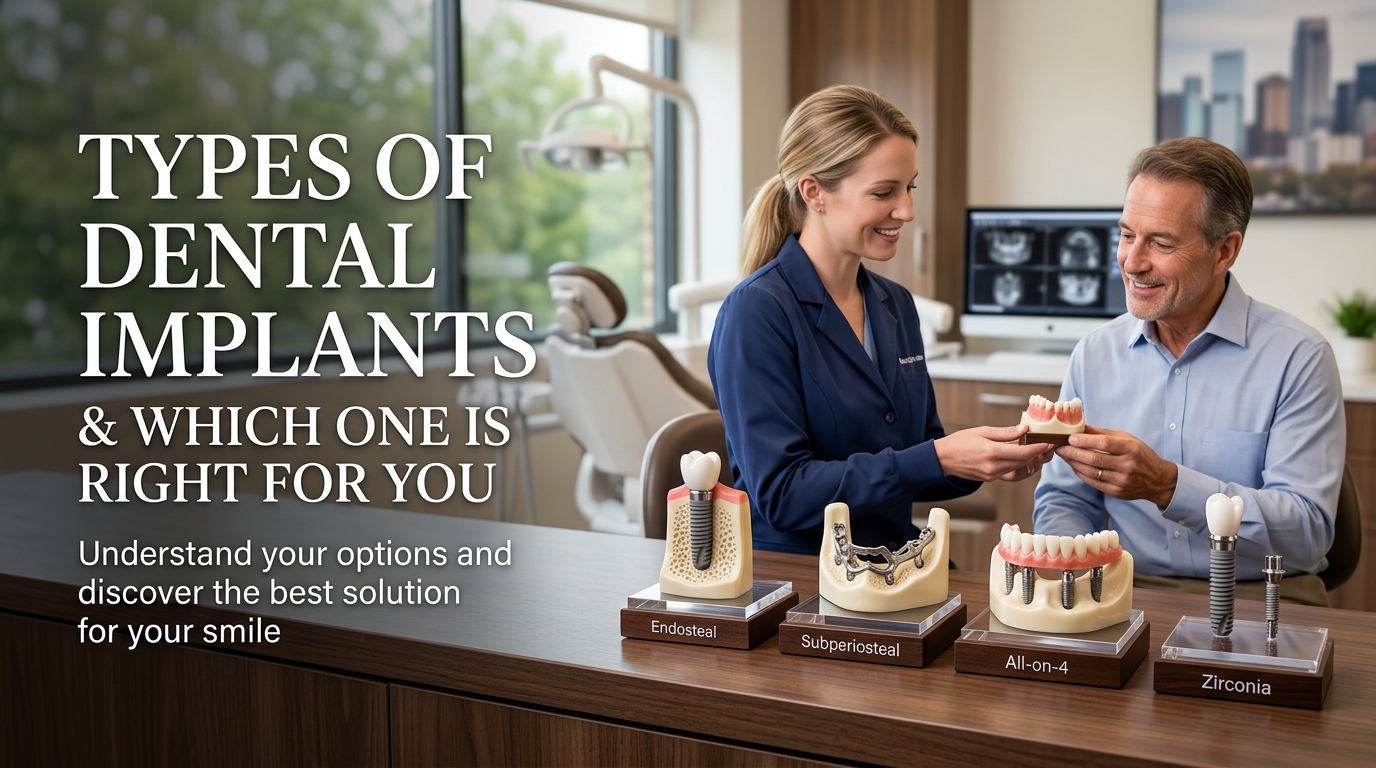
Endosteal Implants
Endosteal implants are the most common type of small titanium screws placed directly into the jawbone. They’re the standard recommendation for patients with sufficient healthy bone volume and are considered the most stable, long-term implant solution available. Most people who receive dental implant treatment receive endosteal implants.
Subperiosteal Implants
Subperiosteal implants are not placed in the bone. Doctors usually put these unique frames on top of the jawbone but hide them right under the pink gum tissue. They are made for patients who have lost too much bone to get regular implants without painful bone grafts. As the mouth heals, the metal blends with the gums, providing secure support for new teeth.
All-on-4 and All-on-6 Implants
The All-on-4 and the All-on-6 implants are both active full-arch replacement solutions. They use four or six strategically placed implants to support a full set of upper or lower teeth. These systems are specifically designed for people who have lost most or all of their teeth and want a set, permanent fix that doesn’t have to be taken out. The hardware is placed by oral surgeons to touch as much of the available bone as possible, which often eliminates the need for painful bone grafting.
Mini Dental Implants
Mini dental implants are narrower than standard implants, making them suitable for patients with limited bone volume who can’t accommodate a full-sized implant without extensive preparation. They’re also used in areas of the mouth where space is restricted. The placement procedure is typically less invasive than standard implant surgery.
Upper Dental Implants
Upper Dental Implants, or maxillary jaw require extra planning since there are sinus cavities right above the upper back teeth. If the bone density in this area is low, you may need to have a sinus lift performed to build up the bone for the implant to sit in. The upper jaw patients require specialist evaluation and imaging to guarantee accurate implantation to avoid the sinus floor and maintain long-term stability of the implant.
Which Dental Implant Is Right for You?
Selecting the perfect dental implants treatment requires a personalized assessment of your unique clinical needs.
Your ideal option depends on:
- Your available jawbone density and structural volume must be sufficient to securely anchor the implant post
- Your current oral and general health status determines how successfully your tissues will heal after surgery
- The exact number of missing teeth dictates whether you need a single crown or a full bridge
- Your personal long-term smile expectations must align realistically with your available financial investment budget
Benefits of Dental Implants Treatment
Dental implants offer a combination of natural appearance and structural security, which makes it easier to eat and speak, and they will be more comfortable to wear every day without creating any itching or adverse effects. Those looking for the best therapeutic care, obtaining dental implants in Mumbai provides access to the best specialists and most cutting-edge technologies.
The primary long-term advantages of this treatment include:
- Natural Function and Aesthetics: Implants look, feel and function very similar to natural teeth so that patients can smile with confidence and eat normally without the constraints of food and shifting associated with traditional dentures.
- Unmatched Durability: Built to endure With proper care, dental implants will fuse with your anatomy and can easily endure decades, sometimes even a lifetime.
- Critical Bone Maintenance: Implants function like natural tooth roots, stimulating the jawbone and preventing the progressive bone loss that commonly occurs after tooth evacuation, unlike other dental replacement options.
Recovery and Aftercare Tips
Most people recover rapidly and are also able to resume normal daily activities within a few days. It is possible by following the appropriate methods to have a smooth recovery for your mouth and a completely healthy implant.
Top tips for a smooth recovery:
- You can use soft toothbrush and any specific mouthwash that your dentist suggests to gently clean around the implant
- Eat soft foods for the first several days to avoid placing pressure on the healing area
- Please avoid smoking before and after surgery as it may affects healing and increases risk of implant failure
- Make sure you keep all your follow-up visits so your dentist can check on the healing of your mouth precisely.
Conclusion
There are many types of dental implants for different people, and knowing about the possibilities is the first step in making an informed decision regarding dental implant therapy. The proper solution depends on bone density, number of teeth missing, jaw condition and overall dental health. The thing that remains is the necessity of competent advice before any judgments are made. If you are looking for a permanent tooth replacement solution, Dr Teeth Implant Services in Mumbai is the best place to start. They will examine and develop a treatment plan for your dental implants according to your demands.