
Walk into any modern office and you’ll notice the furniture, the layout, maybe even the paint colors. But how often do you actually think about the lighting until something feels wrong? Dim corners that make reading difficult, harsh overhead glare bouncing off computer screens, or that unexplained afternoon fatigue that seems to affect half the team.
Lighting might be one of the most overlooked aspects of office design, yet it profoundly impacts everything from productivity to employee wellbeing. Getting it right means understanding office lux levels Australian standards and why they exist in the first place
Why Lighting Standards Actually Matter in Your Office
Poor lighting affects productivity, causes eye strain, triggers headaches, and can even contribute to workplace accidents. Offices where staff squint at documents all day, spaces where screen glare makes computer work exhausting, or environments where people just feel tired and unfocused all share one common problem: inadequate attention to proper lighting levels.
Australian standards exist specifically to prevent these problems. They’re not arbitrary numbers some committee dreamed up but rather based on research into human vision, task requirements, and what people actually need to work comfortably and safely.
What Exactly Are Lux Levels Anyway
Before diving deeper, understanding what we’re measuring helps clarify the entire topic. Lux measures illuminance, which is basically how much light falls on a surface. One lux equals one lumen per square meter, though the technical definition matters less than the practical application.
Different tasks need different light levels. Reading fine print requires more light than walking down a hallway. Detailed design work needs more than casual conversation in a break room. Your eyes adapt to different conditions, but there are limits. Too little light and you strain to see clearly. Too much creates glare and discomfort. The standards aim for that sweet spot where work happens comfortably.
Office Lux Levels Australian Standards: The Actual Numbers
According to current Australian standards, general office work typically requires 320 lux maintained across the work surface. That’s your baseline for spaces where people do routine paperwork, computer tasks, and typical desk activities.
The standards recognize different task requirements based on what workers actually do in each space. For ordinary office tasks like reading, writing, and regular computer work, that 320 lux minimum applies to most desk areas in typical commercial offices.
Technical drawing, detailed design work, or tasks requiring fine visual discrimination need higher levels, often 400 to 600 lux depending on exactly what’s happening. Teams reviewing architectural plans or doing precision work need adequate lighting to perform effectively.
Conference rooms and meeting spaces also fall around 320 lux, though dimming capability for presentations makes sense. Watching projector screens in brightly lit rooms creates visibility problems.
Corridors, lobbies, and circulation spaces require less, with 160 lux being adequate since people are just moving through these areas rather than performing visual tasks. Break rooms and informal spaces can operate comfortably at 200 to 240 lux as these aren’t task-intensive environments.
The Screen-Based Work Complication
Modern offices throw a wrinkle into traditional lighting standards because nearly everyone stares at screens all day. Office lux levels Australian standards have evolved to address this reality.
Computer screens generate their own light, so the challenge becomes balancing ambient lighting with screen brightness while avoiding glare. Too much overhead light creates reflections on screens. Too little makes everything else in the room difficult to see.
The current approach recommends maintaining that 320 lux on desks while carefully controlling where light comes from. Indirect lighting often works better than harsh overhead fixtures. Positioning workstations to avoid windows directly behind screens or directly in the user’s field of view prevents common glare problems.
Task lighting with individual desk lamps lets workers adjust their immediate environment while keeping general ambient lighting moderate. This gives people control, which matters more than most facility managers realize.
Measuring and Testing Your Office Lighting
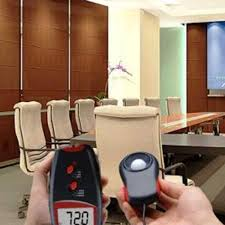
Eyeballing whether your office meets standards simply doesn’t work as you need actual measurements. Light meters or lux meters measure illuminance at specific points. Professional assessments involve taking readings across the workspace at desk height, typically around 750mm above the floor.
The standards specify maintained lux levels, meaning measurements happen under normal conditions with aging lamps, some dirt accumulation, and real-world degradation. Brand new lighting always performs better than six-month-old fixtures, so testing immediately after installation and assuming everything stays perfect forever creates false confidence.
Measuring at multiple points across each work area makes sense since lighting rarely distributes perfectly evenly. Adequate lux near windows but insufficient levels in interior zones happens frequently. The minimum reading at any regularly occupied workstation should still meet standard requirements.
Common Problems in Australian Offices
Renovated warehouses and converted industrial spaces often struggle with lighting. High ceilings and large open areas create challenges since what works for manufacturing doesn’t automatically work for office tasks. Warehouse conversions sometimes have decent fixtures mounted too high to deliver adequate lux at desk level.
Older office buildings frequently have outdated fluorescent systems that never met current standards or have degraded significantly. Yellowed diffusers, aging ballasts, and reduced lamp output combine to create dimmer conditions than anyone realized. People adapt gradually and don’t notice the decline until someone actually measures.
Open plan offices with inconsistent lighting present real challenges. Areas near windows have excessive brightness while interior zones sit dim and gloomy. Proper design balances natural and artificial light, using daylight sensors and zoned controls to maintain consistent levels throughout the day.
Corner offices with floor-to-ceiling glass look impressive but create terrible glare problems. Executives in these spaces often lower blinds completely, defeating the purpose of windows and creating cave-like environments. Proper shading systems and supplemental lighting solve this with proper planning.
Energy Efficiency Versus Adequate Lighting
Some facility managers reduce lighting below recommended levels trying to save energy. Electricity costs money and sustainability matters, but maintaining office lux levels Australian standards doesn’t mean wasting energy.
Modern LED technology delivers required lux levels while using a fraction of the energy older systems consumed. Well-designed LED installations can cut lighting energy use by 50 to 70 percent compared to old fluorescent or incandescent systems while improving light quality.
Occupancy sensors make sense in intermittently used spaces like meeting rooms, storage areas, and restrooms. They reduce waste without impacting task lighting where people work consistently. Daylight harvesting, which automatically dims artificial lights when natural light is adequate, saves energy while maintaining required levels.
Updating Your Office to Meet Current Standards
Workplaces not meeting office lux levels Australian standards have options. Sometimes adding fixtures or replacing old lamps suffices. Other situations require complete redesigns.
Starting with a proper lighting audit conducted by qualified professionals makes sense. They’ll measure current conditions, identify deficiencies, and recommend specific improvements. This documentation also protects against potential workplace safety claims related to inadequate lighting.
LED retrofits offer the easiest upgrade path for many offices. Replacing fluorescent tubes or old fixtures with LED equivalents often boosts lux levels while reducing energy costs. The upfront investment pays back through lower electricity bills and reduced maintenance.
For major renovations, involving lighting designers early matters. They’ll integrate natural and artificial light, specify appropriate fixtures, plan switching and controls, and ensure the final result meets standards while creating pleasant working conditions.
The Bottom Line on Office Lighting Standards
Meeting office lux levels Australian standards provides a safe, productive workplace. Whether designing new offices, renovating existing space, or maintaining current facilities, understanding and achieving proper lighting levels matters significantly. Staff comfort, productivity, and wellbeing depend on lighting quality. Meeting AS/NZS 1680 standards ensures providing conditions where people work effectively without eye strain, headaches, or fatigue.