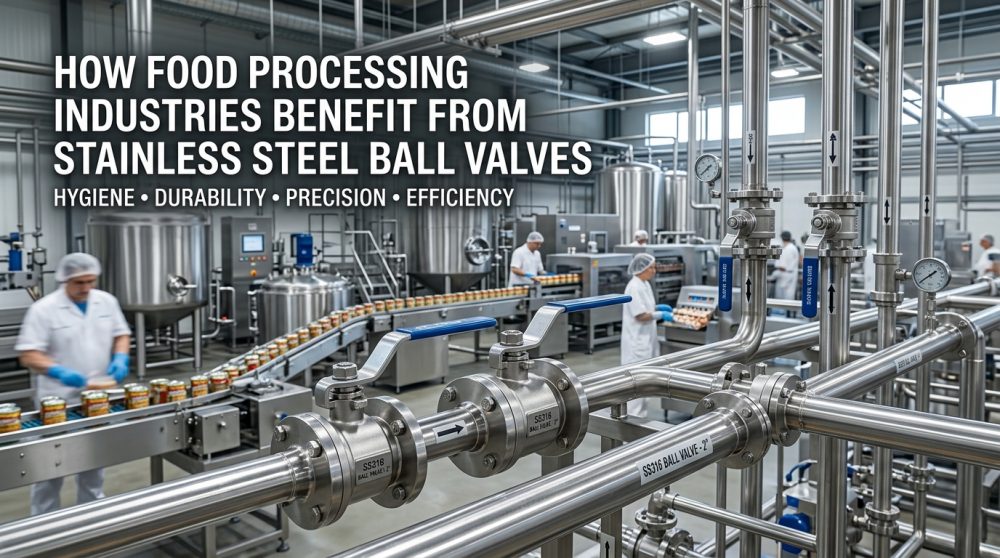
Stainless steel ball valves are critical components in food processing plants where hygiene, contamination prevention, and flow control drive every equipment decision. These environments expose valves to moisture, cleaning agents, food acids, and temperature changes daily. Stainless steel material and design directly determine product safety and operational consistency. That’s why industrial food processing stainless steel ball valves have become the standard across dairy, beverage, and pharmaceutical production lines.
Why Valve Selection Is Important in Food Processing Industries
Valves manage the flow of inputs, finished products and fluids for cleaning at each stage of processing. Bad decisions can result in contamination, leaks and unexpected downtime. Food safety requirements required that equipment to properly resist the corrosion from cleaning chemicals and food acids, operate at a range of pressures and temperatures, and comply with sanitary standards such as those of the FDA and 3-A. When valves fail in the middle of a job, they not only cause downtime, but they can also cause contamination, which can lead to refunds and other legal problems. Choosing the right valve is important for keeping the plant running smoothly and making sure the purity of the product.
Key Benefits of Stainless Steel Ball Valves
Corrosion Resistance in Food Processing Environments
Stainless steel creates a passive protective covering around the material that resists rust, oxidation and chemical attack. Food facilities use aggressive cleaning products such as caustic soda and chlorine-based compounds as a matter of course. These poisons will immediately attack carbon steel valves. Stainless steel can take this. And after years of being cleaned over and over again, stainless steel is still immaculate.
Hygienic Design for Clean Operations
Hygienic stainless steel valves actively stop bacterial growth and product residue buildup because their smooth internal bore completely eliminates all trap points. It also means automated cleaning systems can wash the inside perfectly without taking apart. Your team works less, cleans faster, and avoids dangerous germ contamination easily.
Reliable Flow Control and Leak Prevention
When closed, ball valves provide a tight shut-off to prevent any leakage of product and reduce the loss of material. To protect product consistency, beverage and food manufacturing plants rely on precise flow management. A leaking valve on a food processing line isn’t just a maintenance issue; it’s a quality and compliance issue.
Long Service Life in Continuous Operations
Food processing plants run non-stop, often they run for 24 hours a day. Stainless steel ball valves can be cycled thousands of times without any loss of integrity of seal or performance. This resilience means there will be fewer maintenance shutdowns and production lines can be productive for longer periods of time.
Importance of Food Grade Ball Valves in Product Safety
Food-grade ball valves are made up from stainless steel, which is highly resistant to food, beverages, and medications. They are also resistant to chemicals and will not change the flavor, color or composition of the things they contact. In manufacturing processes where hygiene is a top priority, certified food-grade valves help to minimize the danger of contamination and maintain compliance with food safety requirements throughout the manufacturing process. Applications of Flange End Ball Valves in Food Processing Plants
Applications of Flange End Ball Valves in Food Processing Plants
Flange end ball valves are preferred in larger industrial piping systems where bolted connections provide secure, leak-proof joints and straightforward maintenance access. In food processing plants, they’re commonly found in:
- Dairy processing units handling milk, cream, and pasteurized products
- Beverage manufacturing plants managing carbonated and fermented liquids
- Sauce and syrup production lines
- Edible oil processing systems
- Pharmaceutical food processing environments requiring sanitary connections
The flanged design handles higher pressures and simplifies valve replacement in large-diameter pipe runs without cutting or modifying the pipeline.
Role of Hygienic Stainless Steel Valves in Automated Processing Systems
Modern food processing plants depend on automation for consistent, high-volume output. Hygienic stainless steel valves integrate directly into automated pipelines and accept pneumatic or electric actuators for remote operation. That compatibility supports stable, repeatable flow control across production cycles. Automation also reduces direct human contact with product lines, which directly supports hygiene objectives. The result is better throughput, reduced downtime, and improved process efficiency.
Factors to Consider When Selecting Industrial Food Processing Valves
Choosing the right valve means matching equipment specifications to real operating conditions:
- Valve size: aligned with pipe diameter and required flow rate
- Material grade: food-grade stainless steel for product contact surfaces
- Pressure rating: suitable for maximum system operating pressure
- End connection type: threaded, flanged, or clamp connection based on system design
- Cleaning requirements: CIP or manual cleaning compatibility
- Operating temperature: appropriate for heating, pasteurizing, or chilling processes
- Maintenance accessibility: ease of seal replacement and routine inspection
Conclusion
Stainless steel ball valves are relied on by food firms to keep things clean, to avoid rust, and to keep machines from breaking. Manufacturers of the most recognized valves, such STILONN Valves & Controls, Alfa Laval, Spirax Sarco, and Emerson, are responsible for the manufacturing of flange ball valves that are strong and function without stopping continually. All these clean parts are fully compliant with the high safety requirements for food and pharmaceuticals. They seal perfectly, securely to eliminate leaks and to offer easy connection to automatic computer systems. If you need help choosing your parts, call a trusted valve expert.