Effective Leadership – Its About Getting People Right
Good Leadership isn’t just about making decisions or juggling tasks, its about getting to grips with the people involved. Every single one of your team members brings a unique take on the world – a different personality, a different way of communicating and different motivations. And whilst this can make things tricky, its actually where great leaders start to get the real edge. They’re able to build stronger teams, resolve conflicts before they even happen and get productivity soaring because they understand that people are all different.
This is where the DISC personality framework comes in handy. Loads of managers and HR folk will ask themselves how does DISC work in leadership and management. The DISC model gives leaders a straightforward way of understanding peoples behavioral tendencies and adapting their management style to get the best out of their teams.
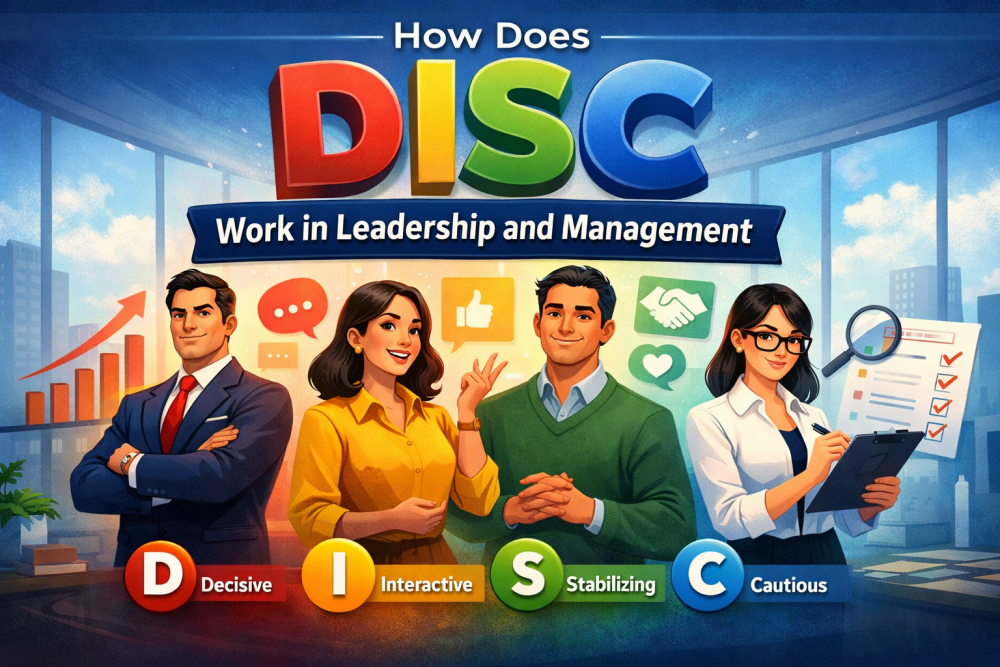
DISC breaks down behavioral styles into four main types: Decisive (D), Interactive (I), Stabilizing (S) and Cautious (C). Each of these styles captures how people approach challenges, how they interact with others and how they react to change or a set structure. When leaders get a grip on these styles, they can start to get the very best out of their employees, delegate responsiblity effectively and even create a pretty balanced work environment.
Getting Your Head Around the DISC Model in Leadership
Before you can even think about applying DISC to leadership, its worth understanding the key characteristics of each style.
Decisive (D) types are goal-orientated and confident to a fault. They are results driven and will always be pushing for more. In a leadership role, they are the ones who will take charge straight away and have no hesitation in making tough decisions.
Interactive (I) personalities are always the life and soul of the party. They are social, enthusiastic and love getting recognition. They can be relied upon to boost team morale and create a positive atmosphere.
Stabilizing (S) types value stability and consistency. They love working with others to keep things going smoothly and are all about maintaining harmony within the team.
Cautious (C) personalities are all about getting things right. They are methodical, love data and making informed decisions and tend to thrive in structured environments.
So what makes a successful leader? Its not about being one style, its about understanding that these different approaches are out there and adjusting your communication and management style accordingly.
Why DISC Actually Matters in Leadership & Management
Companies these days are operating in a whirlwind of a world where everyone thinks, communicates and handles stress differently. That’s exactly why leaders have to figure out how to work with people who aren’t exactly like themselves. The DISC framework lets leaders finally get a grip on these differences rather than grumbling about them.
By using DISC in leadership, you can boost several key areas:
- Clarity in your communication
- Collaboration within the team
- Getting your team members motivated and ready to go
- Conflict resolution techniques
- Making decisions in a way that actually works
When you actually know what drives each personality type, you can tailor your approach to help your team perform at their best.
How DISC Can Help Leaders Improve How They Communicate
Effective communication is one of the most valuable skills for any leader to have. When you get it wrong, you get misunderstandings, missed deadlines and pointless workplace squabbles.
The DISC framework lets you tailor your communication to suit the person your talking to.
Here’s an example:
- Decisive (D) team members need you to get straight to the point and cut through the small stuff. So, try to keep things simple and focus on results rather than unnecessary details.
- Interactive (I) team members love to be talked to in a way that’s enthusiastic and involves a bit of chat. You can motivate them by giving them recognition and actually listening to what they have to say in meetings.
- Stabilizing (S) team members need a calm and supportive atmosphere to really open up. Take the time to listen to their concerns and make them feel secure.
- Cautious (C) team members like it when you give them the facts and the plan clearly laid out. So, make sure you present them with a clear and structured approach.
By adapting your communication style to suit each person, you can cut down on misunderstandings and build stronger bonds between you and your team.
DISC & Decision-Making in Management
Different people have very different styles when it comes to making decisions. Some leaders just go for it and trust their gut, while others take ages over making sure they’ve covered every base.
The DISC framework helps you to understand these differences, and use them to create a balanced approach to decision-making.
- Decisive managers are the ones who are happy to take a few risks and push things forward quickly. They keep things moving and they help the company stay on track.
- Interactive managers like to get everyone else involved and brainstorm ideas. This can be a great way to come up with new solutions and keep people engaged.
- Stabilizing managers will tend to focus on finding a way that works for everyone in the team and keeping the status quo. They keep the team stable and they help the organisation build trust.
- Cautious managers are more careful and will take their time to weigh up the risks and the facts. They make sure things get done right, before rushing headlong into it.
A team with a good mix of DISC styles will usually do better because it brings together speed, creativity, stability and analytical thinking.
Using DISC for Team Motivation
Different employees are motivated by totally different things. The trouble with traditional leadership approaches is they treat everyone in the team the same – without any thought for the fact that people are all wired differently.
DISC helps leaders figure out what drives each individual personality style.
- Decisive (D) types are motivated by challenges – the harder the better, competition is key and they love nothing more than measuring up just to see if they can do better.
- Interactive (I) types are all about being part of a team, and for them that means recognition, social interaction – the more the merrier – and enthusiasm is key.
- Stabilizing (S) types are all about playing it safe, and that means job security which for them is the ultimate motivator, as well as being part of a team effort and getting appreciated for all the work they put in.
- Cautious (C) types are motivated by accuracy and getting things right – and for them that means having expert knowledge at their fingertips and being able to rely on a well-organised system.
When leaders get their act together and start matching tasks, recognition, and rewards to these motivations, you can bet that employee engagement will shoot through the roof.
Managing Conflict with DISC
Conflict in the workplace is pretty much unavoidable – especially when people with different personalities are working together under pressure. And a lot of the time conflicts just come down to people mis-interpreting one another’s behaviour.
The DISC framework is a godsend for leaders trying to sort this all out – because it helps them to get to the root of exactly why certain people are getting upset with one another.
For a start:
- A Decisive (D) employee can often come across as aggressive to others when all they’re doing is being straight with people – they don’t mean to be troublesome.
- An Interactive (I) employee can sometimes seem a bit distracted – but in fact they’re just a bit too focused on sorting out the social dynamics at work.
- A Stabilizing (S) employee tends to hate sudden change – because they like things to stay the same and operate smoothly – consistency is key.
- A Cautious (C) employee can often come across as overly critical – but what they’re actually doing is trying to make sure that everything is perfect and done right.
By understanding where these behavioural patterns come from, leaders can tackle conflicts in a much more objective way – and actually get their teams to start communicating better with each other.
Building Balanced Teams with DISC
One of the best ways that DISC can be put to use by leaders is in teambuilding. When you get a good balance of different behavioural strengths in a team, that’s when the magic happens.
For instance:
- Decisive individuals can push the team towards achieving their goals – and making sure that they actually get there on time to boot.
- Interactive individuals can make sure that everyone in the team is working together and having a good time while they’re at it – and keeping morale up is a key part of their job.
- Stabilizing individuals keep things ticking along smoothly – making sure that everything runs like clockwork.
- Cautious individuals are always double checking to make sure that the quality is right, the detail is right, and that the planning has been thorough.
Leaders who understand these strengths can start to assign roles in a way that makes the most of each member’s skills. And as a result, the whole team works together in perfect harmony.
DISC as a Leadership Development Tool
But DISC doesn’t just stop at helping leaders manage their teams. It’s also brilliant for helping leaders develop their own self awareness.
Self aware leaders will know:
- What their natural communication style is
- Their strengths and weaknesses
- How their behaviour comes across to other people
For example, a highly Decisive leader might learn to sit back a bit more and actually listen to what the Stabilizing types in the team have to say – and vice versa.
By getting a bit more adaptable in this way, leaders can get a lot better at worrying about what their team needs – rather than just what they themselves want.
Implementing DISC in Organisations
So how can organisations actually get more use out of DISC? Well, here are a few ideas:
- Leadership training workshops that teach teams about the basics of DISC
- Team-building sessions that get people working together – and learning how to understand each other better
- Communication improvement programmes that help people adapt the way they talk to each other
- Coaching and mentoring that helps leaders work out what would be the best approach for each member of their team
- Conflict resolution strategies that address the root causes of conflicts – rather than just covering up the symptoms.
When you get DISC integrated into your leadership culture, your teams start to become a lot more aware of the differences between them – and they start to communicate a lot more effectively.
Conclusion
Leadership is all about getting to know people and actually getting them to work together towards a common goal. And that’s exactly what the DISC behavioural framework can help you do. By getting to know the four main DISC styles – Decisive, Interactive, Stabilising, and Cautious – leaders can create a work environment that actually understands – and motivates – the people in it.