The Rise of Green Technology In 2026
With the rise of environmental problems such as increased energy consumption, global warming and pollution in 2026, there is an emergence of green technology as the new wave of advancement in lifestyle and environmental protection. This wave is driven due to the integration of environment conservation and technological advances. The incorporation of green technology in sectors like electricity, transportation, architecture and sustainable manufacturing is not only a necessity but also something which cannot be avoided anymore.
Green building and sustainable construction practices are further contributing to this shift. Modern infrastructure is increasingly combining ecofriendly material, energy efficient design and rainwater harvesting systems in buildings. Focus is shifting on maximum natural light and proper ventilation to reduce the need of artificial energy consumption.
Not only do such innovations decrease the environmental footprint, but they make processes more efficient, hence, decreasing costs while increasing the quality of life. Such innovations, like renewables, AI and data-driven solutions, have made it easier to manage resources in an environmentally sustainable manner.
Smart Homes and IoT for Sustainable Living
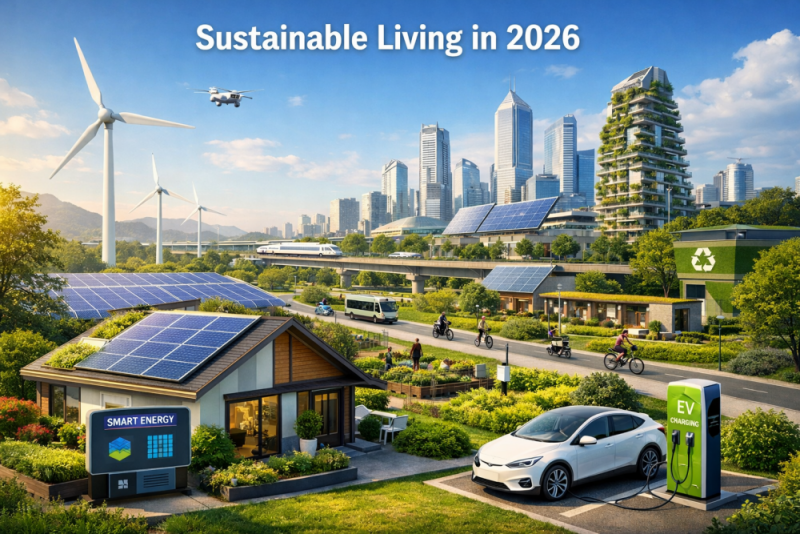
The concept of smart homes based on IoT plays an important role in sustainable living in the year 2026. The idea of smart homes consists of interconnecting devices and sensors that enable people to monitor their consumption of resources such as energy and water.
Efficiency of energy and water is one of the key benefits of IoT enabled houses. The use of smart thermostats helps regulate temperatures based on occupancy and climatic conditions. The use of smart irrigation and water detection systems will assist in detecting water leaks and controlling water flow to prevent water wastage.
Moreover, engineers have designed smart devices such as fridges, washing machines, and air conditioning systems to operate with minimal energy consumption. Users can also control these devices through mobile applications.
From an overall perspective, IoT technology in smart homes plays an important role in encouraging people to embrace a sustainable way of life.
Sustainable transportation and mobility
Transportation is undergoing a rapid transformation with a shift towards more sustainable mobility solutions. With the rising concern over air pollution, climate change and fuel process, people are shifting more towards electric vehicles as a primary mode of transportation.
Compared to traditional vehicles that run on petrol or diesel and contribute significantly in air pollution and greenhouse gas emission, electric vehicles produce zero emission, making them the smarter choice. In addition, alternative fuels such as hydrogens and biofuels are being explored as future mobility solutions.
This proves that, in 2026, electric transportation and electric mobility is not just about replacing fuel powered vehicles but about a complete shift towards a smarter, cleaner and more efficient movement system.
Consumer awareness and sustainable lifestyle choices
Among the strongest influences leading to a sustainable lifestyle is the increasing consciousness that customers have developed. No more do people act as mere consumers, but as educated consumers who are well aware of the effects of their actions on society and the environment.
Digital platforms and social media have significantly influenced these choices. Information about climate change, pollution and sustainable choices is more accessible than ever. Instead of overconsumption, people are now focusing on buy less but buy better.
Sustainable lifestyle also impact daily lifestyle choices. People are actively choosing public transport and car pooling over personal commute. People are reducing food waste and water consumption and increasingly adopting renewable resources in everyday homes.
Consumer awareness is acting as a mode for change, influencing market, shaping policies and encouraging motivation. By making informed decisions, individuals are playing a direct role in building a more sustainable and environmentally secure future.
The future of sustainable living
Rapid technological development, changes in consumer behaviour, and the international community’s firm stance on preserving nature dictate future trends in sustainability.
Moreover, green advancements in materials and construction are going to transform the very idea of building and living. The houses of the future will use minimal amounts of energy and will even generate electricity, clean air and recycle water.
Cities are evolving into smart cities where energy, transportation, waste management and water systems are all interconnected through advanced technologies like artificial intelligence and big data.
In conclusion, the future of sustainable living is all about achieving balance. As green technology continues to evolve, it will not only minimize environmental damage, but also enable more efficient, healthier and smarter lifestyle.