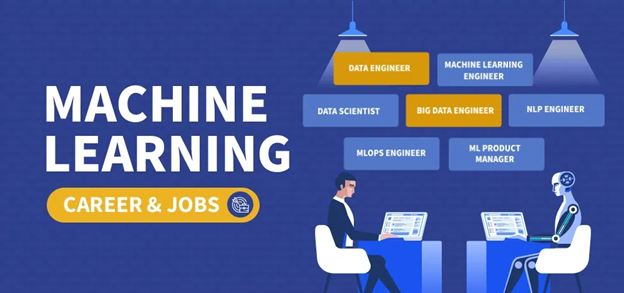
Machine learning engineering has become one of the hardest roles in technology to hire for. The demand is broad — ML engineers are being sought by companies across healthcare, finance, e-commerce, logistics, and enterprise software — but the qualified talent pool is narrow and highly competitive. Engineers with production ML experience, strong software fundamentals, and the ability to work across the full model lifecycle are genuinely scarce, and they know it.
For companies competing for that talent, the platform and process used to source candidates matters more than most hiring teams realize. VeriiPro was built specifically for the US IT talent market — and its machine learning engineer jobs listings represent an active, curated pool of ML talent that general job boards cannot replicate.
Here is why machine learning hiring is so difficult, and how VeriiPro changes the equation for companies trying to move faster.
Why Hiring Machine Learning Engineers Is So Hard
The difficulty is structural, not cyclical. It will not resolve when the market softens.
The skill set is genuinely rare. A production-ready ML engineer is not just someone who can run a Jupyter notebook or fine-tune a model on a benchmark dataset. Companies need engineers who can design data pipelines, train and evaluate models at scale, deploy model serving infrastructure, monitor model drift in production, and retrain or retune when performance degrades. That complete profile — model development plus production engineering plus software architecture — describes a small fraction of people who call themselves ML engineers.
The academic supply does not match the industry need. Graduate programs in machine learning produce researchers. The skills valued in industry — MLOps, model deployment, feature engineering for production data, working within engineering organizations and shipping code alongside product teams — are learned on the job. The transition from research-competent to production-competent takes time, and many ML candidates are still making that transition.
Competition is relentless. Hyperscalers, AI-first startups, and well-funded enterprise software companies compete for the same engineers. Companies that cannot move quickly in their hiring process lose candidates to faster-moving competitors — not because of salary, but because of process latency. An engineer who accepts an offer from Google or Anthropic mid-process does not come back.
General job boards create noise, not signal. Posting a machine learning engineering role on a broad job platform generates applications from candidates with widely varying skill levels, relevance, and intent. Screening that volume to find genuinely qualified candidates is time-consuming — and often produces disappointment when the top-of-funnel volume does not translate into bottom-of-funnel quality.
What Companies Actually Need in a Machine Learning Engineer
Understanding what you are hiring for is the foundation of hiring it efficiently. The machine learning engineer role has fragmented into several distinct profiles — and confusing them leads to mismatched candidates and wasted hiring cycles.
ML engineer (model development focus): Builds and trains models. Deep expertise in frameworks like PyTorch or TensorFlow, strong statistics and mathematics background, experience with experimentation and model evaluation. This profile is common in research-adjacent teams and AI product teams building novel capabilities.
ML engineer (MLOps / platform focus): Builds the infrastructure that makes model development and deployment possible. Feature stores, model registries, training pipelines, serving infrastructure, monitoring and alerting. This profile is closer to a senior software engineer with ML specialization than a researcher who has learned to code.
Applied ML engineer: Takes existing models and adapts them to a specific business problem. Strong on integration, fine-tuning, and evaluation. Less focused on novel architecture development, more focused on making AI work reliably in a production product context.
ML engineer (full-stack): Covers the full lifecycle — from data through model through production. Most in-demand and most scarce. Typically 5+ years of experience across multiple parts of the stack.
Knowing which profile you need before you post shapes every downstream decision: the job description, the screening criteria, the interview process, and the offer range.
How VeriiPro Helps Companies Hire ML Engineers Faster
VeriiPro is a US-focused IT job marketplace that connects employers directly with technical talent across the country. For companies hiring machine learning engineers, the platform offers several specific advantages over general job boards.
IT-specialized talent pool. VeriiPro’s user base is IT and technology professionals — not job seekers across all categories. When you post a machine learning engineering role, the candidate pool seeing that listing is already filtered by professional domain. The signal-to-noise ratio is significantly better than platforms where ML engineer listings compete with retail and logistics roles for attention.
Active ML-specific listings. VeriiPro’s machine learning engineer jobs section aggregates and surfaces ML-specific roles to candidates actively searching in this discipline. Engineers looking for ML positions on VeriiPro are not browsing general listings and stumbling across your role — they are searching specifically for it.
US market focus. For companies hiring within the United States — whether in-person, hybrid, or US-remote — VeriiPro’s geographic concentration means your listing reaches US-based candidates and US-located professionals without the dilution of a global platform. For IT jobs in the US across the full technology spectrum, that same focus applies.
Speed of candidate flow. In a tight talent market, the speed at which qualified candidates encounter your listing matters. VeriiPro’s platform is built to surface active roles to candidates who match the role criteria — reducing the time between posting and first-qualified-application compared to general boards where ML listings get buried under volume.
Common Mistakes Companies Make When Hiring ML Engineers
Even with the right platform, hiring process errors consistently slow or derail ML engineering searches. Here are the most common:
Writing a job description that describes a unicorn. Requiring 5+ years of experience in a technology that has existed for 3 years, listing 20+ required skills where 8 of them are sufficient, or combining ML development, MLOps, data engineering, and research responsibilities into a single role — these patterns screen out qualified candidates and attract only those who will claim any skill on a resume. Write the description for the role you actually need, not the role of your dreams.
Moving too slowly. Machine learning engineers who are actively interviewing are typically running parallel processes. A company that takes three weeks between screening call and technical interview will lose candidates to companies that move in one. Define your hiring timeline upfront and enforce it.
Technical interviews that test the wrong things. Leetcode-style algorithm puzzles do not predict ML engineering performance. Case-based technical interviews — “here is a production scenario, walk us through how you’d approach it” — are more predictive and more respected by senior candidates.
Underpaying relative to market. Mid-level ML engineers in the US command $130,000–$180,000 in base salary at most companies. Senior engineers with production experience range from $160,000–$220,000+. Offers significantly below these ranges will be declined — or will attract candidates who could not get competitive offers elsewhere.
What to Include in a Strong ML Engineer Job Posting
Before posting on any platform, including VeriiPro, a well-structured job description significantly improves the quality of applications you receive:
- Specific role type — State explicitly whether this is model development, MLOps, applied ML, or a combination, and in what proportion
- Tech stack — List the frameworks, tools, and infrastructure the engineer will actually work with, not aspirational tools you hope to adopt
- Data environment — Describe the scale and nature of the data the engineer will work with; this signals technical sophistication to candidates
- Team structure — How many ML engineers on the team? Who does the role report to? What is the collaboration model with data engineering and product?
- Production vs. research balance — What percentage of the role involves production systems versus experimentation and development work?
- Compensation range — Listings that include salary ranges receive more qualified applications and fewer drop-offs mid-process from candidates whose expectations do not align
Finding the Right ML Engineers Starts with the Right Platform
The companies that hire machine learning engineers most successfully are not necessarily the ones with the biggest budgets or the strongest brand. They are the ones with clear role definitions, efficient processes, and distribution to the right talent pools.
VeriiPro’s IT-specialized marketplace connects employers with machine learning engineers who are actively looking for their next role — not passive candidates who need to be persuaded to leave their current position. For companies that need to move quickly in a competitive market, that distinction matters.
Post your machine learning engineering role on VeriiPro and reach the technical talent that general job boards miss.