The UAE’s real estate market has grown continuously in recent years. UAE real estate is a global investment market where people invest in apartments and luxury homes. Talk about UAE real estate market, especially in Dubai and Abu Dhabi; it is the first preference for investment. Everyone wants to invest in a Dubai luxury apartment.
According to the Dubai Land Department’s (DLD) latest report on 8th June 2026, Dubai’s First-Time Home Buyer Program is driving home ownership, with 3,200 buyers and AED 5 billion in property sales. The move signals increasing demand from residents wanting to move from renting to owning.
As more first-time buyers enter the vibrant city, they apply for a luxury lifestyle and security.
This is directly related to the real estate sales cycle, where real estate brokers are gathering more inquiry leads and following up on negotiation, contract generation and more.
But it’s not easy for the sales team to manage real estate properties. The sales team needs a smart solution to manage and track the entire real estate sales cycle; that’s why they need property management software.
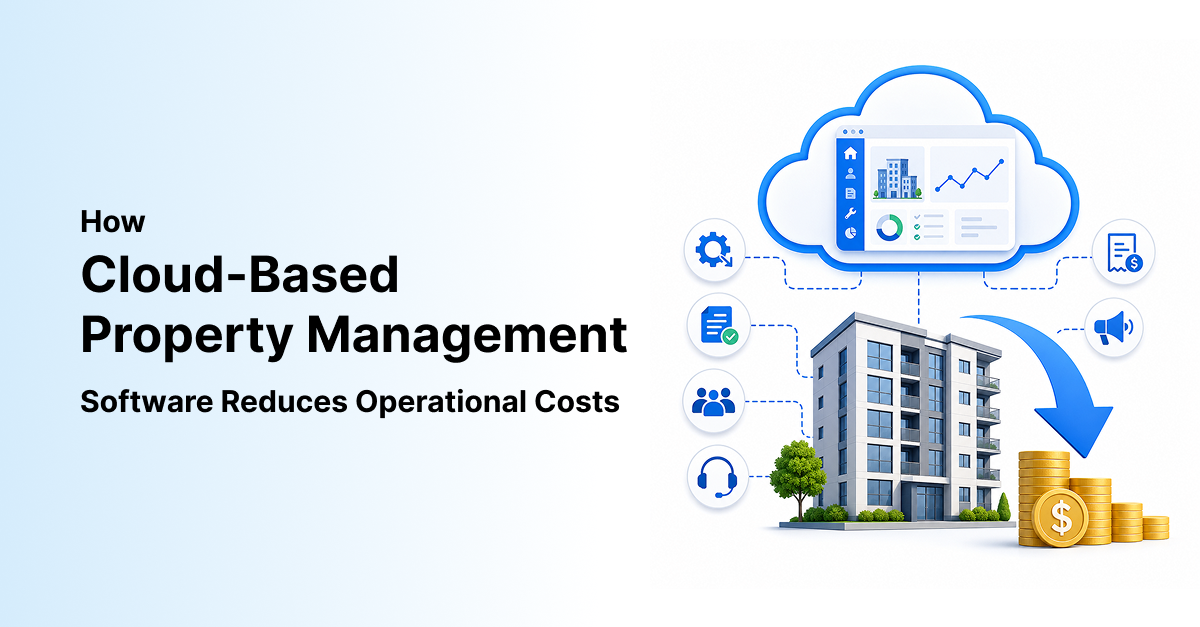
Let’s discuss how cloud-based property management software helps to manage the real estate cycle and reduce operational costs.
Common Operational Challenges in Real Estate Management
Managing a property portfolio involves more than collecting rents and handling maintenance requests.
- Managing property inquiries from multiple platforms, such as PropertyFinder, Buyut, Instagram, WhatsApp, and others, requires significant effort.
- Managing all leads and following up on each inquiry can be quite challenging.
- Property management inventory issue The property listings on each platform require regular updates to reflect things like offers, properties for sale, sales completed, etc.
- draft manual contracts and handle documents, causing delays.
- Communication gap between agents and client
- Sometimes, missed follow-ups and delayed responses can result in deals not being closed.
- High adminstrative workload in the sales team.
What Is Cloud-Based Property Management Software?
Cloud property management software allows the sales team to control all aspects of your property online and monitor the performance of the property from a central point of control.
Traditional software compared with cloud-based property management software (PMS) is not even on the same level. Traditional software is installed on a local server for storage, but cloud-based property management software can be accessed from anywhere and anytime with the internet
1. Reducing Administrative Costs Through Automation
One of the biggest operational expenses in property management is administrative labour cost.
Managing property records, managing contracts, tracking payment records, scheduling follow-ups and site visits and preparing reports often requires a lot of effort, time and resources.
With cloud-based property management software, you can automate routine (daily) or repetitive tasks, allowing your team to be more efficient and reducing the need for manual work.
Real estate companies, for example, can:
- Create sales and contract documents automatically
- Follow up with leads and clients by scheduling reminders
- Invoices and payments can be created instantly
- Real-time inventory and availability management
- Easy-to-use tools for report generation and business insight
By reducing manual work, the sales team can focus on more important responsibilities and tasks, such as customer relationship management, while the organisation lowers labour-related expenses.
2. Reducing the cost of IT infrastructure
Traditional software required investment in hardware, servers, software updates, security management to keep data secure and data backup solutions. But cloud-based software changes the entire process short.
Cloud-based software providers update infrastructure, security and upgrade systems continuously for better user experience and competitive advantage.
Organizations benefit from this approach because:
- Cost savings on capital expenditures
- Reduce server maintenance costs
- Avoid expensive software upgrades an
- Minimize downtime risks
Property portfolios can benefit from these savings over time.
3. Maintenance cost control
Good control of maintenance costs can greatly improve overall operational efficiency. Predictive analytics and remote monitoring technologies can help organisations to be proactive in solving potential issues before they become more serious, ensuring that resources are used in the most beneficial way and costs are kept to a minimum.
4. Cash Flow and Rent Collection
Cash flow is a key element of the financial health of any business. Manual rent collection is a time-consuming process that takes a lot of effort; in the end this leads to delay. Continuous follow-up and accounting processes are ineffective.
Property managers offer the below-mentioned services with smart solutions:
- online payment option
- Automatic Payment reminder with due date
- Digital invoices
- Real-time Payment history tracking
These features increase collection rates and lower the administrative costs of managing accounts receivable.
5. Increasing Team Productivity Across Multiple Properties
Without centralized system employe spend valuable time searching documents, coordinating information, and responding to inquiries.
A cloud-based platform provides instant access to important information and tools necessary for efficient operations.
By structuring workflows and enhancing communication, the platform allows teams to concentrate on their primary responsibilities, which ultimately results in better service delivery and increased tenant satisfaction.
6. Improving Data Accuracy and Reducing Costly Errors
A small data entry mistake can create major problems in real estate business. Incorrect customer information, duplicate records, outdated property availability, and contract errors can lead to delays, customer dissatisfaction, and lost revenue.
When data is managed manually across spreadsheets, emails, and multiple systems, the chances of errors increase significantly.
Cloud-based property management software helps maintain accurate and up-to-date information by storing all property, customer, and transaction data in a centralized system.
Real estate companies can benefit from:
- Single source of property and customer data
- Automatic updates across the system
- Reduced duplicate records
- Accurate contract and transaction information
- Real-time visibility into property availability and sales status
By improving data accuracy and reducing manual errors, real estate companies can avoid costly mistakes, improve customer trust, and ensure smoother day-to-day operations.
Final Thoughts
Cloud-based property management software help real estate businesses streamline daily operations, automate repetitive tasks, improve team productivity, manage property data more effectively and reduce infrastructure expenses. From lead collection to management and contract generation to rent collection and reporting, a centralized platform helps ogranization operate more effectively while maintaining a high level of customer services.
Competitive markets like the UAE real estate market continue to increase, so investing in the right property management software is important for staying ahead of the competition. By leveraging innovative tools and technologies, businesses can enhance their decision-making processes and adapt swiftly to market trends, ultimately driving growth and maximising profitability.