Lord Shiva is one of the prime deities in Hinduism. He is an integral part of a trinity- Brahma, Vishnu, Mahesh. The information that ancient Holy texts and Scriptures gives us about Lord Shiva in terms of His personality, existence, nature, living, His various forms, how to worship Him and the benefits of worshipping Him are divine and rich.
This knowledge has earned Him devotees not only in India but worldwide. People from different sects, religion and origin worship Lord Shiva. People of many faiths today ardently revere and worship Him, called ‘Triloknatha’ (God of the three worlds – Heavens, Earth, and Hell).
Lord Shiva is one of the most powerful deities and the one who is Sampurna (complete/whole). He makes an individual see the truth clearly and brings him close to his Supreme Conscious. He is one selfless Supreme who consumed the dangerous poison Halahala to safeguard Gods, demigods, animals and other beings.
Worship of Lord Shiva
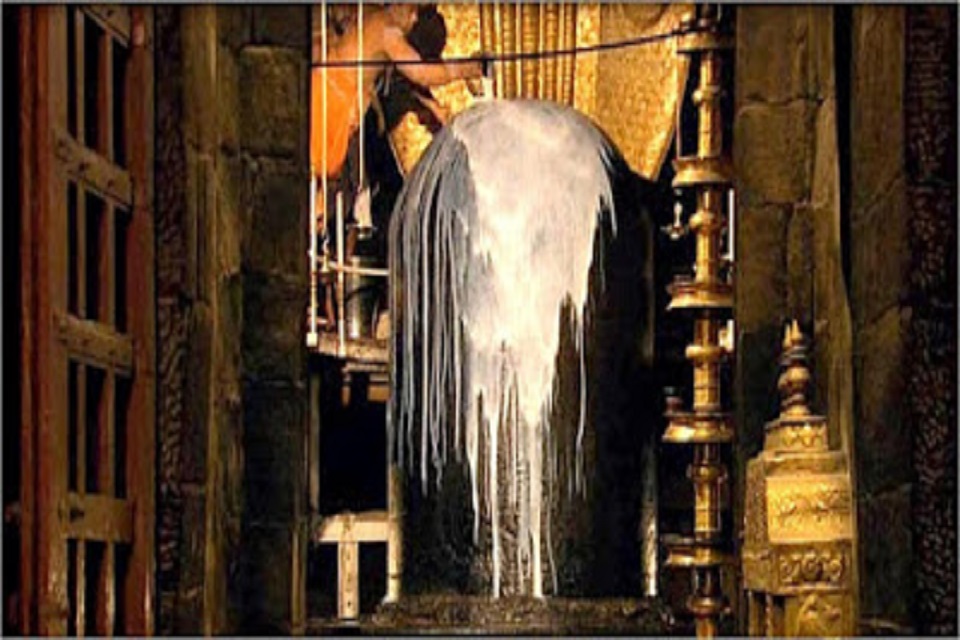
Lord Shiva is commonly worshipped in the form of Shivalingam. People perform worship in many ways, such as conducting Shiv Pujas, chanting Shiva mantras, meditating, and reciting aartis. However, the most fundamental and important form of Shiv Puja is the ritual of “Abhishekam,” in which devotees pour water, milk, and panchamrit over the Shivalinga, symbolizing its holy bathing. The act of offering milk to Shivalinga has been one of the debatable discussions since the past few years. Did you know many of our age-old customs and rituals have scientific logic associated with it? It’s true! Given below is the detailed explanation that throws light on the same.
Why do we offer milk to Shivalinga?
If you observe closely, devotees do not consume the offerings made to Lord Shiva, as they consider them Nirmalaya. He is the Lord who wants to give mankind and other beings the best of everything and safeguard them from any kind of poison and harm. Let us now focus on the question ‘Why do we offer milk to Shivalinga?’
There are many legends revolving around the above-mentioned question. One example is that Lord Shiva consumed Halahala, the dangerous poison. The poison was so dreadful that it turned Lord Shiva’s face and neck blue. In order to stop it from spreading Maa Parvati held his neck. Devotees offered milk, honey, and similar items to Shiva to soothe His throat.
According to another legend of the Maha Shivaratri festival, people believe that Lord Shiva performs the Tandava, so they offer soothing items like milk, curd, and honey to calm Him.
According to the Sanatan Dharma, and ancient Holy texts and Scriptures Lord Shiva is the epitome of everything. He is the God of Gods and the Supreme of all. In order to safeguard all the beings, He can consume poison without thinking about His own well-being. During ancient times in the period of monsoon, people believed that milk turns into poison due to high production of germs and bacteria in the air. So they offered milk to Lord Shiva as an act that co-relates to the episode of Samudra Manthan where Lord Shiva consumed poison to safeguard one and all. Thus, the ritual of offering milk to Shivalinga started.
If you study the Ayurveda in details you will understand that our body comprises of three components namely the Kapha (cough), Vata (Air) and Pitta (Acids). These three components play a significant role in the smooth and accurate functioning of the body. If these components increase or lose balance in the body, a person may feel weak and become prone to ailments.
As summer changes to the rainy season, Vata increases in the body during the month of Shravana. During this period, people should avoid foods high in Vata. Leafy green vegetables have high Vata levels. That is why, especially in Shravana, people generally avoid buying leafy vegetables.
During the monsoon, the risk of viral infections rises. The Kapha component in the body is also believed to increase. Hence in order to stay fit and healthy during monsoons, we do not purchase or eat leafy vegetables.
Also, bone-related ailment like arthritis and rheumatism increases during the Shravana month hence in the ancient scripts too worship of Lord Shiva during the month of Shravana is said to be done by offering milk. Hence people often gallons of milk to the Shivlinga.
Another scientific reason is during the monsoon season, the cattle eat many insects and bacteria along with the grass. So the milk supplied by these cattle is not fit for our consumption. Similarly, cattle feed on lots of greens as it is their staple diet. During the rainy season, people avoid consuming milk and dairy products and instead offer them to Lord Shiva.