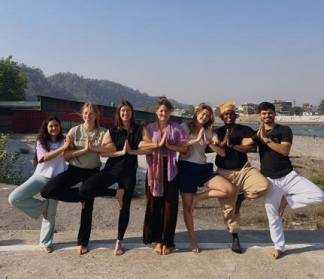
Something quiet has been shifting in the way people in their 30s and 40s think about time off. Not a week at a resort. Not a long weekend city break. A proper month. Away from the screen, the schedule, and the version of themselves that has been running on empty for longer than they would like to admit.
And increasingly, that month is being spent in India.
The Burnout Generation Is Looking for Something Different
Stress-related illness, career dissatisfaction, and a growing sense that productivity has become its own kind of trap – these are not fringe concerns. They are the defining experience of a generation that was told to work hard, build a career, and figure out the rest later. Later has arrived.
What India offers, and what no hotel spa or weekend retreat can replicate, is genuine immersion. A setting where slowness is built into the architecture of the day. Where the pace is set by something older and quieter than a notification.
Rishikesh, in particular, has become the destination of choice for this kind of traveller. Not because it is fashionable, though it has caught that wave too, but because it has been doing this
for thousands of years. The Himalayan foothills, the Ganga running through the centre, the ashrams and temples that line its banks, this is not a wellness product. It is a place where something real has been practised for a very long time, and it shows.
What Are People Actually Going There to Do?
The most common answer, and the one that has seen the sharpest growth among international travellers in their 30s and 40s, is yoga teacher training.
This surprises people who assume teacher training is only for people who want to teach. It is not. The majority of people who enrol in a 200-hour programme have no intention of standing in front of a class. They come for the structure, the depth, and the experience of living yoga fully — not sampling it.
A 200-hour residential programme typically runs for 23 days. You practice twice a day. Study philosophy, anatomy, and breathing techniques. You eat simple food, sleep deeply, and wake early. The routine sounds demanding on paper. In practice, most people describe it as the first time in years they have felt genuinely rested.
Schools like Rishikul Yogshala Rishikesh, have seen this shift directly. What began as a school for dedicated practitioners now draws teachers, lawyers, nurses, marketing directors, and university graduates from over 80 countries, all looking for the same thing. A month that actually changes something.
The school’s 200 hour yoga teacher training in Rishikesh runs every month of the year, is certified by Yoga Alliance USA, and has certified more than 25,000 students since 2010. It is not a retreat. It is a serious program, and that seriousness is part of what draws people who are tired of things that do not go deep enough.
Why a Month and Not a Week?
Because a week is not enough time to actually change anything. You arrive, you adjust, you leave. The rhythm of your real life follows you home before you have had a chance to set it down.
A month is different. By the end of the first week, the noise had started to settle. The second, you begin to feel what it is like to live without the weight of your usual context. By the third, something shifts that is difficult to name but easy to feel.
This is what people in their 30s and 40s are increasingly willing to pay for—not luxury, but depth. Not escape, but return.
The Practical Reality
India remains one of the most affordable wellness destinations in the world. A fully residential 23-day program at Rishikul Yogshala Rishikesh, including accommodation, three meals daily, all course materials, and a Yoga Alliance certification, starts at $1,200. That number stops most Western travellers mid-sentence.
As recently reported, yoga tourism to Rishikesh is growing faster than ever, with international enrollments rising steadily across age groups, particularly among professionals between 30 and 50 who are choosing purposeful travel over passive holidays. Full details here.
The question people in this age group are asking is no longer whether they can afford a month in India. It is whether they can afford not to take it.